
Thank you for Subscribing to Environmental Business Review Weekly Brief
Environmental Business Review: Specials Magazine
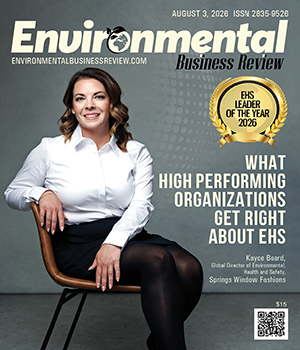
Kayce Board is an EHS leader with over 20 years of experience. At Springs Window Fashions, she oversees the strategy, governance, and performance of EHS programs across its global manufacturing network. In an interview with Environmental Business Review, Board shared her insights on strengthening operations through EHS, integrating safety into daily operations, aligning strategies with environmental objectives, and the future of EHS leadership...
Advanced Wastewater Treatment Technology
Most wastewater systems work well—at first. Standard solutions are built for predictable conditions, designed to meet baseline compliance and throughput. But in the real world, not every plant operates the same way. Variables like influent quality, flow rates, operational priorities, and regulatory pressures shift constantly. Off-the-shelf systems and rigid designs can’t adapt fast enough. Plants end up stuck—modifying equipment, creating workarounds, and fighting uphill battles to stay compliant and productive. That’s where Clean Water Technology, Inc. (CWT) stands apart. As a global leader in engineering and manufacturing for wastewater treatment, the company builds solutions flexible enough to integrate into any treatment plan, regardless of complexity or changing conditions. Its systems are not confined to a single mode of operation—flexibility is built into their foundation, allowing them to evolve with shifting processes, regulatory requirements, and business needs. Whether adapting to new load profiles, scaling production, or meeting tighter discharge limits, CWT solutions adjust without the need for costly retrofits or operational compromises. Instead of working against change, the technology works with it—keeping productivity high, compliance straightforward, and operations focused on what matters most. “We’re not here to sell you a new pump. We’re here to make your plant work better—with smarter processes, better integration, and modern tech that transforms what you already have into something far more efficient,” says Ariel Lechter, CEO and president. Patented Technology That Raises the Bar The company has transformed the wastewater industry with its patented technologies. Backed by significant investment in research and development, these solutions are engineered to meet the demands of any wastewater application—from primary systems and advanced anaerobic systems to complete, end-to-end treatment solutions. The flagship innovation—the Gas Energy Mixing (GEM) System—is a proprietary solution that provides a distinct edge over conventional methods. Before the GEM System, wastewater treatment relied on Dissolved Air Flotation (DAF), which uses a large tank and a bed of bubbles and chemical additives to float low-density particles. The GEM System takes a completely different approach, using hydrocyclone technology instead of conventional flotation. In a large tank, a DAF adds air at the very end of the process to float particles that are attached only by the collision method. In the GEM System, air is dissolved into 100 percent of the waste stream, generating true nanobubbles that attach to the floc. All separation occurs inside the vortex motion in the hydrocyclone. By the time the water leaves the hydrocyclone and enters the tank, the solids and liquids are separated. In a much smaller tank the floc is then skimmed from the surface, delivering superior results. The GEM System allows for higher efficiency in chemical use, has a smaller footprint, and produces drier sludge. Though the system has been on the market for over 20 years, it has been continuously improved and remains best in class. The product excels in primary treatment, offering scalability for flow and loading—key factors in wastewater management. Its adaptability makes it ideal for modern factories that need systems to grow with them, while also reducing chemical consumption and operational costs. In secondary wastewater treatment, CWT stands out as one of the few companies to develop an Expanded Granular Sludge Bed (EGSB) system tailored for smaller-scale use. While most major engineering firms only deploy EGSBs for large projects, CWT’s EGSB can handle lower flows at costs that are within the budgets of small companies—making the technology accessible to a broader range of facilities. CWT was also the first to bring the “Swingmill” to market—a dual screw press that dewaters sludge and is self-cleaning. This dual benefit reduces the amount of sludge while reducing downtime and maintenance. These innovations highlight how CWT stays ahead of the curve and continues to push the industry forward. Support Beyond the System Along with advanced systems, the company provides a range of support services designed to give customers clarity and confidence at every stage. These include lab reports, system demonstrations, and access to online training courses. Operators can receive specialized training through CWT’s digital learning platform to ensure proper system use and maintenance. It also maintains an in-house laboratory, where customers regularly send samples for ongoing analysis and performance optimization.

Environmental and Ecological Consulting Service

Wilbanks Engineering & Environmental Solutions is a turnkey design-build environmental consultancy specializing in restoring waterways and landscapes into balanced, self-sustaining systems. Led by Zachary Wilbanks, the firm has evolved from a consulting practice into a full-service provider, managing every stage of ecological restoration. This evolution stemmed from years of field experience, where well-conceived designs often lost integrity once outside contractors executed them. By overseeing both design and implementation, Wilbanks maintains rigorous quality control, ensuring that what is engineered in planning performs reliably in the field. “With a single team responsible for outcomes, clients experience faster decisions and consistent accountability throughout each project,” says Wilbanks, principal owner. The firm’s focus extends to stream and wetland restoration, stream bank stabilization, and culvert and bridge replacements that enhance the passage of aquatic organisms. These projects help reduce erosion, reconnect fragmented habitats and strengthen the long-term resilience of natural waterways. Drawing on expertise in environmental, civil, mining and ecological engineering, Wilbanks approaches each project with both technical precision and ecological awareness. Its engineers and environmental scientists are trained through specialized workshops and certifications, combining field-tested experience with disciplined execution to deliver lasting results. Each assignment is delivered as a complete, start-to-finish solution that includes design, permitting, construction and post-restoration monitoring. The firm’s process is grounded in Natural Channel Design (NCD) principles and meets all requirements of the Clean Water Act’s Section 404. Every project is designed to restore natural form and function, allowing ecosystems to recover and sustain themselves over time.
CXO INSIGHTS
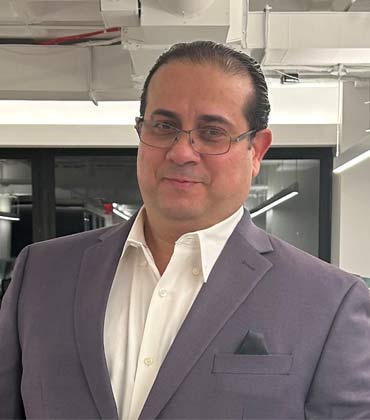
Asbestos Inside Our Homes
Denio Sturzeneker, Corporate Safety Director, Plaza Construction
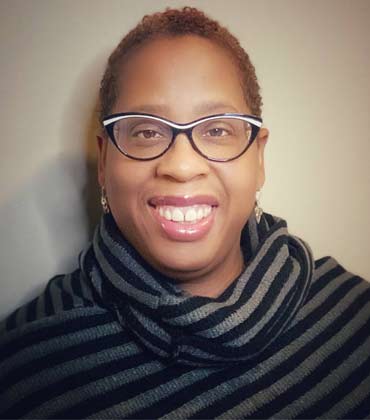
BASF's Plastics Journey - Making the Transformation Go Faster
Susan Jackson, Head of Communications & Sustainability, BASF Performance Materials

Building a Proactive, People-Driven Safety Culture
Blake Lawrence, Environmental, Health and Safety Manager, Ellingson

The Crucial Link between Empathy and Active Caring in Enhancing Occupational Safety Outcomes
Dr. Jay R. Harf CSP, CPEA, CSHM, Vice President Global Environmental Health Safety & Sustainability, Xylem
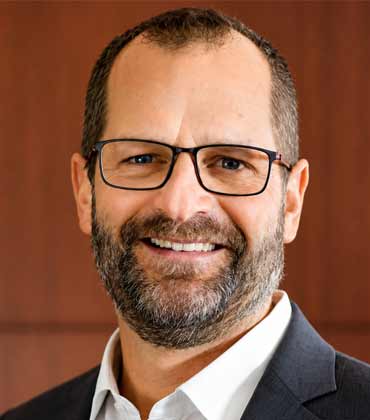
Delivering Workplace Safety on a Global Scale
Joel Cooper, Global Director of Sustainability, EH&S and Facilites, JR Automation


IN FOCUS
Navigating Regulations and Technology in Excavation and Environmental Services
Excavation and environmental services support sustainable development, regulatory compliance, infrastructure growth, and responsible land management.
Advanced Storage Tank Solutions Supporting Industrial Safety Efficiency
Growing demand for safe, efficient and sustainable storage systems is driving innovation in commercial and industrial tank solutions.
EDITORIAL
Leading Environmental Progress Through Operational Excellence
Environmental responsibility has become an integral part of day-to-day business operations. Organizations are embedding environmental, health and safety practices into operational decision-making, recognising that responsible resource management, workplace safety and efficient processes contribute to stronger business performance. In this edition of Environmental Business Review, we feature leaders who are integrating environmental responsibility into their organizations while delivering measurable operational and sustainability outcomes.
Our cover story features Kayce Board of Springs Window Fashions, recognized as the EHS Leader of the Year 2026. She has helped reposition environmental, health and safety as a core element of operational strategy by aligning safety, environmental stewardship and business performance. By strengthening frontline engagement, practical risk management, real-time safety visibility and collaboration with operations, she has built systems that encourage shared ownership, continuous improvement and sustainable performance across the company’s global manufacturing network.
This issue also features perspectives from sustainability leaders tackling complex environmental challenges from different angles. Susan Jackson, Head of Communications & Sustainability at BASF Performance Materials, discusses how circular material design, advanced recycling technologies and industry partnerships are expanding opportunities to keep plastics in productive use.
John Lovenburg, Vice President of Environment and Sustainability at BNSF Railway, explains how sustainability is becoming a strategic advantage for freight transportation. From expanding the use of biofuels and hybrid locomotive technologies to advancing circular resource management, he outlines practical approaches that reduce emissions, improve operational efficiency and strengthen long-term resilience across the rail network.
Together, these leaders and organizations show how environmental progress is achieved through disciplined execution, practical innovation and a commitment to embedding sustainability into everyday operations rather than treating it as a separate initiative. We invite our readers to explore these perspectives and discover how environmental leadership continues to shape stronger organizations and a more sustainable future.
