Thank you for Subscribing to Environmental Business Review Weekly Brief
Environmental Business Review: Specials Magazine
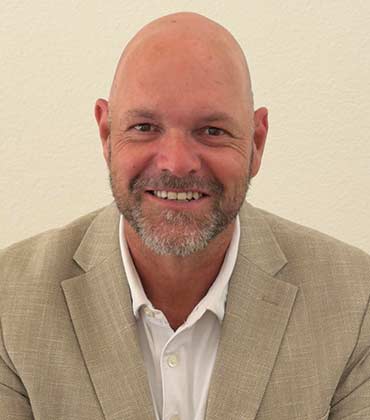
Travis Schory is the Director of Enterprise EHS at Great Day Improvements, one of America’s fastest-growing home remodeling companies and parent to trusted brands including Champion, LeafGuard and Patio Enclosures. With his extensive experience, Schory has built a career on a conviction that unsettles much of his profession. Safety is not enforced; it is built. Across manufacturing floors, installation sites and corporate operations, he has rejected the old authority-driven model in favor of a culture where workers run toward safety. That philosophy, along with the measurable results that support it, has earned him recognition as the EHS Leader of the Year 2026. The Lesson that Reshaped My Leadership I started under mentors who were more of the safety police type, not the culture-building type. I realized quickly that the approach was broken. You have to focus on people’s needs, include them and collaborate with those who do the work. Being a safety leader, you’re the expert on the safety side. But when you have people who have been doing a specific job in manufacturing or construction for a long time, they are subject-matter experts in what they do. Safety professionals can always look at something, see the flaws and see how it could be improved. We also need to ensure that what we’re doing does not impact the process or create an additional hazard. That’s where workers come in: explaining what they do and how they do it and, in collaboration with engineering, ensuring that our methods keep them safe and keep production going. What shaped me most is learning that the ego aspect that sometimes comes with safety must be checked. You have to be willing to hear the feedback and respond to it productively. Why People Must Come Before Policy Great Day Improvements is heavily people-focused. We are focused on how we treat our people and making sure they understand everything. It’s really building off the need to be there for them. We don’t say ‘w
Top Waste Recycling Services 2026
For most asset owners and property managers, the priority list runs in a familiar order: fill the vacant space, drive foot traffic, protect the guest experience. Waste gets handled in the background. The invoice gets paid. Nobody asks questions. That assumption is costing most properties more than they realize. Commercial real estate tracks cap rates, NOI, tenant mix, and capital expenditure with precision. Waste and recycling costs get far less attention. For most retail and mixed-use properties, waste is treated as a fixed operating expense, reviewed at contract renewal and otherwise ignored. Property managers overseeing hundreds of moving parts rarely have the specialized expertise to optimize them. The result is a category that is almost always overspent and invisible to ownership. Green360 Partners was built to fix that. “Most facility or property managers have never had anyone audit their waste program. Our 360 Waste Diversion Analysis usually uncovers savings and efficiency opportunities,” says Patrick Truninger, National Director - Strategic Accounts.
Environmental Toxicity Testing Services
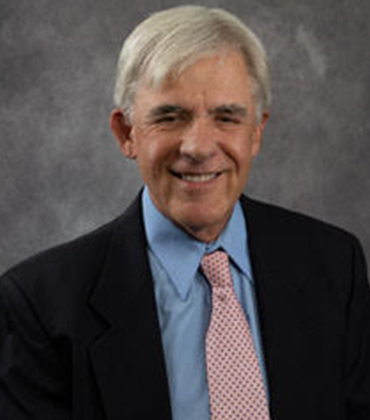
The Clean Water Act of 1972 established a set of objectives related to the protection of America’s water resources by limiting the scope and/or volume of chemicals discharged to its surface waters. The initial focus of determining the environmental acceptability of wastewaters was limited to analytical measurements of the concentrations of individual chemicals in complex waste streams. This approach was ultimately determined to be insufficient due to the recognition that organisms respond to the concentration of bioavailable contaminants and not necessarily the total concentration as measured in most analytical procedures. And given the lack of analytical procedures for the tens of thousands of registered chemicals, the objectives of the legislation were simply not feasible. Organisms will also respond to the totality of contaminants present and those contaminants in combination may create either synergistic or antagonistic effects that could under- or overestimate toxic effects. This evolution in understanding and enlightenment led to the development of Whole Effluent Toxicity (WET) testing methods in the mid 1980s prompting the “birth” of the biomonitoring industry. AquaTox Research, Inc. (ARI) was founded as a spin-off from a Syracuse, NY based organization in 1992 by Dr. Frank Doherty, a lab manager with that organization since 1987. The scope of aquatic toxicity testing and consulting services offered since the Corporation’s inception has shifted over time to align with the data demands of the local regulatory community. This field would not exist without the regulatorily driven testing requirements from state and federal agencies to comply with environmental legislation. Dr. Doherty and ARI have witnessed and participated in its evolution since its first days 33 years earlier. Most recently, since 2022, NYS has required its aquatic toxicity testing contractors to be accredited by the NYS Department of Health through the Environmental Laboratory Accreditation Program (ELAP), creating requirements for technical competence alongside independently audited quality assurance.” “The singular goal of the Corporation is to help companies not pollute,” says Dr. Francis Doherty, lab director. This mission is carried out through two primary functions. The first function is to conduct routine acute and chronic toxicity tests with the fathead minnow, Pimephales promelas, and the aquatic invertebrate cladoceran, Ceriodaphnia dubia. New York State regulators typically require quarterly toxicity tests with both species for one year out of a 5-year permit cycle. If during that process test results exceed the limits published in a facility’s discharge permit, there is a testing requirement referred to as a Toxicity Identification/Reduction Evaluation (TI/RE). The second function of ARI is to assist permittees either locate the source and/or identity of the toxic materials and suggest approaches for remediation within a TI/RE program. ARI utilizes a non-traditional approach to the application of TI/RE programs relying on the expertise and knowledge of plant operators in conjunction with targeted toxicity testing activities to achieve compliance. The NYS DEC also routinely requires permittees to perform compliance testing when Water Treatment Chemicals (WTC) are put into service. ARI provides compliance testing either through toxicity tests of the WTCs themselves or routine WET testing to demonstrate environmental acceptability of the treated wastewater. Outlining the toxicity profile of WTCs to the standard test organisms is required to ensure an adequate safety factor between toxicity test limits and proposed dosage rates in contrast to the issuance of conditional approval for the use of the WTCs contingent upon demonstrating environmental acceptability in a series of routine effluent toxicity tests.
Commercial Composting Solutions
What operational challenges define modern commercial composting facilities? Commercial composting operations often face complex site constraints; feedstock variability, regulatory requirements, and community sensitivity all determine whether a facility succeeds or risks operational disruption. Addressing these realities requires technology and support grounded in experience, practical evaluation, and long-term operational support. Since 1992, Green Mountain Technologies (GMT) has worked with customers to navigate these challenges by designing composting solutions for real-world operating conditions. Organizations turn to GMT for their cutting-edge technology and depth of experience planning, building, and operating composting facilities. Nearly all of GMT’s work comes through referrals, reflecting an approach in which customer success is inseparable from the company’s own. GMT takes a technology-agnostic approach, guiding customers toward composting solutions that align with their land constraints, operating environment, and budget. Their product line includes aerated static pile (ASP) systems, membrane compost covers, In-vessel composting solutions, and a variety of tractor powered turning equipment. “At the end of the day we are a mission driven company, focused on removing barriers to composting infrastructure. Our focus is on creating financially and environmentally sustainable composting operations that last for decades, not short-term sales,” says Orion Black-Brown, president.

CXO INSIGHTS

Real Estates Role in Decarbonization: A System Approach
Peter Killeen, Senior Sustainable Operations Manager, JLL
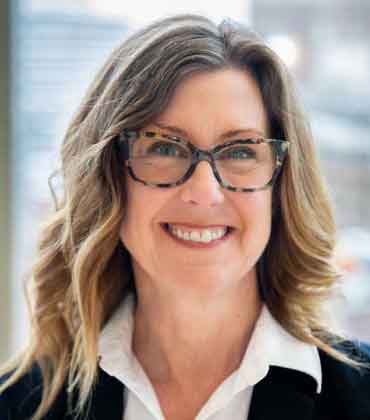
25 Years of Environmental Excellence: Celebrating Delaware Norths Greenpath Program
Debbie Friedel, Corporate Director of Sustainability, Delaware North

From Landfill To Leadership: Driving Sustainability In The Waste Industry
Amy Davies, P.E., Regional Environmental & Compliance Manager, Casella Waste Systems, Inc

Why RCRA Compliance is the Manufacturing EHS Manager's Blind Spot
Noah Barrow, Environmental Health and Safety Manager, KYB Americas Corporation
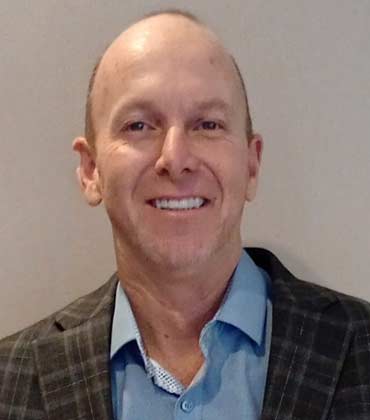
Designing Environmental Strategy as a Business Imperative
Jeremy Martin, Environmental Health & Safety Manager, SignResource


IN FOCUS
Air Dispersion Modeling Solutions Enhancing Environmental Decision-Making
Advanced air dispersion modeling helps organizations assess emissions, ensure compliance, minimize risks, and support sustainable environmental management.
Driving Change: Environmental Regulations and the Future of Waste Recycling
Environmental regulations are accelerating the adoption of advanced recycling technologies, improving waste tracking, reducing emissions and supporting sustainable resource recovery worldwide.
EDITORIAL
Advancing Sustainability Through Measurable Results
Organizations today are under growing pressure to turn sustainability commitments into measurable outcomes while balancing environmental responsibility with business performance and long-term resilience. In this edition of Environmental Business Review, we examine leaders and organizations that are showing what that balance looks like in practice.
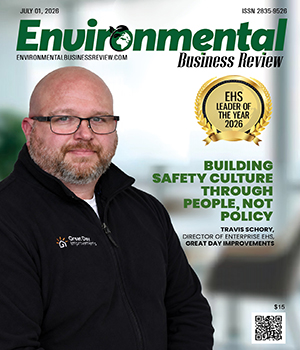
Our cover story features Travis Schory of Great Day Improvements, recognized as the EHS Leader of the Year 2026. Rather than relying on enforcement alone, Schory has spent his career building cultures where employees take ownership of safety and actively participate in shaping it. His guidance has helped the organization to create an environment defined by trust, engagement and accountability.
Green360 is recognized as the Top Waste Recycling Services 2026 for helping organizations uncover value in an area that often receives little strategic attention. Through waste audits, invoice analysis and service optimization, the company enables property owners and managers to reduce unnecessary costs while improving waste diversion performance. Its work highlights an important reality: operational efficiency and environmental responsibility are often more closely connected than many organizations realize.
This edition also features perspectives from industry leaders navigating some of sustainability’s most complex challenges. Peter Killeen, Senior Sustainable Operations Manager at JLL, explores the critical role real estate plays in decarbonization, emphasizing the opportunities created through energy efficiency, sustainable building practices and stronger collaboration across stakeholders.
Jonathan (J.W.) Hackett, Senior Director, Environmental Products at Global Partners LP, examines how compensated fuels can help organizations navigate the realities of the energy transition, offering a practical approach that balances existing infrastructure, growing energy demand and emissions reduction objectives.
Taken together, these stories highlight an important reality: meaningful progress is rarely the result of a single initiative. It is built through thoughtful leadership, informed decision-making and a commitment to solving problems in practical ways. We invite you to explore this edition and discover how leaders across industries are translating environmental commitments into meaningful action and measurable results.
