
Thank you for Subscribing to Environmental Business Review Weekly Brief
Environmental Business Review: Specials Magazine
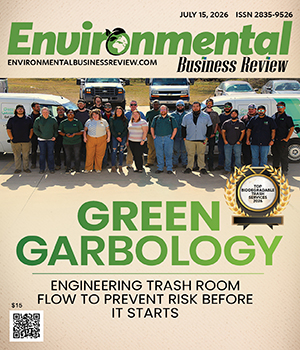
Green Garbology
Engineering Trash Room Flow to Prevent Risk Before It Starts
“In many buildings, waste management begins and ends with the selling of equipment or cleaning services. Often missed are how waste moves through a building, where it slows, where it fails and how those failures can lead to odor, pest issues, equipment strain and fire risk,” says Braedyn Inmon, owner and operator of Green Garbology . That was the gap his father, Steve Inmon, spent much of his life trying to close. Steve entered the industry through his own father, who ran a compactor rental company. He spent decades inside trash rooms installing, fabricating, repairing and redesigning compactors, balers and chutes. He learned about machines by fixing them and about trash rooms by working inside them. Braedyn spent much of his childhood watching his dad work. “Even when we would go to grocery stores, my father would want to drive back around and see what kind of equipment the store had,” says Inmon. “As a kid, that came with its own frustrations, but I always thought it was quite cool how Dad could walk into a room and tell you the dimensions. His spatial reasoning and design instincts were incredible.” Across hundreds of properties, Steve saw trash equipment treated as an afterthought until odor complaints, breakdowns or safety issues forced emergency action.
Sustainable Packaging
Morris Packaging
Custom Flexible Packaging Built for Sustainability and Production
Penny Steinwagner, Director of Sustainability
Recyclability matters, but the package still has to protect what is inside. If it fails there, it has missed the larger sustainability purpose. That practical tension shapes how Morris Packaging, a sustainable flexible-packaging manufacturer, approaches every extended producer responsibility (EPR) packaging conversation. Morris Packaging manufactures custom pouches, rollstock and barrier films for food, pet food, lawn and garden products. It has worked with recycled content, a combination of post-consumer resin (PCR) and post-industrial resin (PIR), for years, long before EPR became a market priority. That history matters now as brands evaluate how existing packaging structures align with evolving EPR requirements while still protecting the product, running on equipment and holding commercial value. “Every customer has a different goal. Some are looking for PCR content, others want mono-material structures and others need a balance of both. Our role is to meet them where they are and help them move forward without losing performance,” says Penny Steinwagner, Director of Sustainability. Start With What Exists Before Morris Packaging recommends any new structure, it builds a complete picture of the existing one. Its technical team creates a detailed data sheet for each customer that breaks down every material layer by weight and composition. That baseline is more than documentation. It gives brands a factual starting point for understanding what their package is made of, how each layer contributes to performance and where meaningful change can begin. That baseline has compliance value, too. When brands file for EPR, packaging is categorized by material type and weight. An inaccurate breakdown can place a package in the wrong category or create an incomplete view of its compliance exposure. Morris Packaging’s data sheets help customers categorize packaging more accurately, giving them a clearer view of how material choices may affect EPR exposure.

Ecological Restoration

Bird Folk Forestry
Advancing Wildlife Recovery through Tailored Forest Restoration
Jane Capozzelli, Owner, Bird Biologist and Forestry Specialist
Every property has different ecological conditions, and every landowner has different goals. Ecological restoration of private forestlands requires a customized approach built around the land condition, the species a landowner wants to support and the financial viability needed to sustain the work long term. Bird Folk Forestry offers custom wildlife-focused habitat restoration plans designed specifically for private landowners. By combining conservation grant funding and on-ground forestry implementation, the company transforms historically logged forests into functioning ecosystems. “Every acre counts,” says Jane Capozzelli, owner, bird biologist and forestry specialist. “No matter how large the restoration project is, we are committed to making it happen.” Driven by a passion for wildlife and habitat restoration, Capozzelli founded Bird Folk Forestry in West Virginia after leaving the United States Department of Agriculture (USDA). She took a federal buyout and invested her severance to launch the business. Combining her background in conservation and bird biology, she designs species-specific restoration strategies for West Virginia's privately owned forests.
Climate Change
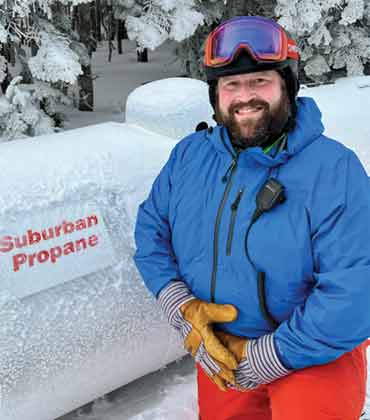
Transforming the Green Tech Industry With Low-Carbon Energy
M. Douglas Dagan, Senior Vice President - Renewable Energy, Suburban Propane [NYSE: SPH]
Environmental Monitoring

A Journey of Building Resilient and Effective EHS Systems
Kelvin Roth, Vice President, Environment, Health, Safety and Quality, CF Industries [NYSE: CF]
Environmental Consulting

DTE Energy Lights the Way with Biodiversity Efforts
Christy Clark, Director, Environmental Management and Safety, DTE Energy [NYSE: DTE]
Ecological Restoration

Designing and Collecting Automotive Supply Chain Packaging for Recycling
Kellen Mahoney, Director, Suppliers Partnership for the Environment (SP), and Bridget Grewal, Director, Packaging CI, Magna International
Environmental Compliance

The Power of Waste - Maximizing its potential through innovative fuel cell technology
Ivor Castelino, Energy Transition Leader - Biogas and Carbon Capture, Bloom Energy

IN MY OPINION
Environmental Planning
Shining Light On Environmental Due Diligence: Key Considerations For Solar Development
Katie L. Morgan, PWS, Principal, Partner Engineering & Science, Inc
IN FOCUS
Biodegradable Trash Service: Redefining Waste Management through Sustainable Practices
Biodegradable trash services transform waste management by prioritizing organic decomposition, reducing environmental impact, and supporting circular resource systems across communities.
EDITORIAL
Redefining Environmental Stewardship through Operational Excellence
Across industries, organizations are finding that meaningful environmental progress starts with practical solutions that reduce waste and embed sustainability in everyday operations. In this edition of Environmental Business Review, we explore how operational excellence, engineering expertise and disciplined execution are helping businesses deliver lasting environmental impact.
Our cover story features Green Garbology, recognized as the Top Biodegradable Trash Services 2026. The company is redefining waste management by treating trash rooms as critical infrastructure. Through wasteflow analysis, NFPA 82-compliant inspections, preventive maintenance and biodegradable cleaning technologies, Green Garbology helps property owners reduce fire risk, extend equipment life and create cleaner, safer, more reliable facilities.
Morris Packaging, recognized as the Top Engineering and Producing Packaging Solution 2026, is helping brands balance recyclability with manufacturing performance through custom-engineered flexible packaging solutions. Bird Folk Forestry, recognized as the Top Habitat Restoration Services 2026, restores private forest ecosystems through science-based habitat management and sustainable forestry practices.
Also recognized among the Top 10 EHS Leaders 2026 are Gabe Glovatsky of Forgent Power Solutions, Donovan Quebedeaux of ISC Constructors, Melissa McMahon of JX Truck Center and Idalia Luna of Mentor Technical Group. Together, they demonstrate how modern EHS leadership is strengthening risk prevention, workforce engagement and operational excellence.
This issue also features perspectives from industry leaders. Kellen Mahoney, Director at Suppliers Partnership for the Environment, and Bridget Grewal, Director of Packaging CI at Magna International, examine how collaboration can improve the recyclability of automotive packaging through better design and circular material recovery. Ivor Castelino, Energy Transition Leader - Biogas and Carbon Capture at Bloom Energy, explores how fuel cell technology converts waste-derived biogas into cleaner, more efficient electricity.
Together, these stories show that environmental leadership is built on turning ideas into meaningful results. From waste management and sustainable packaging to habitat restoration, workplace safety and clean energy, the organizations and leaders featured in this edition are creating lasting environmental value through practical innovation. We invite you to explore their stories and discover how thoughtful execution is helping shape a more sustainable future.
