
Automatic Self-Cleaning Water Filtration Manufacturers

Automatic self-cleaning water filtration manufacturers produce filtration systems that remove debris while reducing manual maintenance needs. With a focus on filtration efficiency, system durability, water flow control and service reliability, they support cleaner water use and more dependable infrastructure performance.

Tekleen Automatic Filters: Engineering Water Filtration around Real-World Operating Conditions
Tekleen Automatic Filters
Engineering Water Filtration around Real-World Operating Conditions
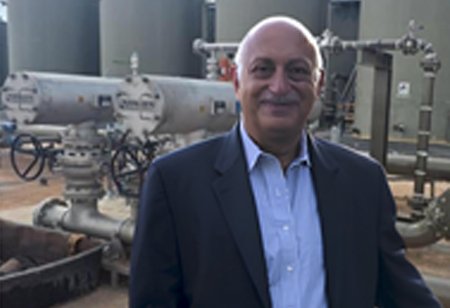
Nagui Elyas, Chief Executive Officer, Dan F. Flanick, Chief Revenue Officer
Maintaining reliable water systems has become increasingly important as industries face varying water quality conditions, rising maintenance costs and growing demands for uninterrupted production.

Automatic Self-Cleaning Water Filtration Solutions Supporting Sustainable Water Management

Clean and reliable water is one of the highest needs for residential, commercial, industrial and municipal activities. With growing water needs, companies are seeking filtration solutions that will ensure water quality while minimizing maintenance complexity and downtime. To overcome these challenges, automatic self-cleaning water filtration solutions have been developed that employ advanced cleaning technologies to automatically remove trapped dirt without any disruption to normal water filtration. The systems can help to ensure the filtration performance is consistent, more efficient, and therefore achieve long-term water management objectives, making them increasingly important within the environmental business sector.

Setting the Standard for Self-Cleaning Water Filtration

Water filtration failures rarely remain confined to the filter itself. Suspended solids can clog spray nozzles, foul heat exchangers, block irrigation emitters and restrict cooling loops. The resulting pressure loss, maintenance calls and process interruptions affect production schedules, energy use and equipment life. Executives evaluating automatic selfcleaning water filtration should therefore look beyond nominal screen ratings or purchase price. The stronger decision is based on how well a system handles the actual water source, maintains flow during cleaning and controls cost over years of service.

The Human Infrastructure: Why People, Not Just Pipes, Define The Future of Water Utilities
TOHO Water Authority
The Human Infrastructure: Why People, Not Just Pipes, Define The Future of Water Utilities
Elisa Williams, Director, Treatment Operations, Water

Elisa Williams serves as director of treatment operations, Water, for TOHO Water Authority, where she oversees water treatment operations, water quality programs and strategic initiatives supporting regulatory compliance and operational excellence. With more than 20 years of experience in the water and wastewater industry, she has built a reputation for developing sustainable operational systems, strengthening workforce capabilities and advancing proactive utility management practices. Elisa is a strong advocate for leadership development, knowledge retention and the role of human infrastructure in ensuring long-term utility resilience.

Automatic Self-Cleaning Water Filtration Manufacturers Info

Q1
What Do Top Automatic Self-Cleaning Water Filtration Manufacturers Provide?
Top Automatic Self-Cleaning Water Filtration Manufacturers develop filtration equipment that removes suspended solids and other unwanted particles while reducing the need for manual cleaning. Systems can be designed for industrial water, irrigation, cooling, process water and other applications where continuous flow matters. Their work typically covers filter design, filtration media or screens, cleaning mechanisms, controls and system integration, with performance matched to water quality and operating conditions.
Q2
What Types of Systems Fall Within Automatic Self-Cleaning Water Filtration?
Top Automatic Self-Cleaning Water Filtration Manufacturers may offer screen filters, disc filters, mesh-based systems and automated backwashing or flushing configurations. The right arrangement depends on particle size, flow rate, pressure conditions, water chemistry and the consequences of restricted flow. Some installations operate as individual units, while larger systems combine multiple filtration stages to maintain water quality and support uninterrupted operation.
Q3
Why Is Demand Growing for Automatic Water Filtration Systems?
Top Automatic Self-Cleaning Water Filtration Manufacturers address a practical need for reliable filtration with less routine intervention. Demand is supported by tighter water-management requirements, pressure to reduce maintenance work, greater reuse of water and the need to protect downstream equipment. In applications where fouling can interrupt production or irrigation, automated cleaning can help maintain flow without requiring frequent shutdowns for manual filter servicing.
Q4
How Are Leading Water Filtration Manufacturers Evaluated?
Top Automatic Self-Cleaning Water Filtration Manufacturers are evaluated through factors such as filtration efficiency, flow capacity, cleaning reliability, pressure loss, durability and ease of maintenance. Decision-makers also need to consider compatibility with existing piping, controls, water conditions and operating schedules. Lifecycle cost can be as important as initial equipment price because energy use, replacement parts, labor and unplanned downtime affect the long-term value of a filtration system.
Q5
How Can Self-Cleaning Filtration Improve Operational Value?
Top Automatic Self-Cleaning Water Filtration Manufacturers can help organizations reduce manual cleaning and keep critical water systems operating more consistently. Automated cleaning can limit buildup on filtration surfaces and reduce the frequency of interventions, supporting more predictable maintenance. The value is application-dependent: a system must deliver the required particle removal and flow performance without creating excessive pressure loss, energy demand or maintenance complexity.
Q6
What Role Do Automation and Filtration Technology Play?
Top Automatic Self-Cleaning Water Filtration Manufacturers increasingly combine mechanical filtration with sensors, control logic and automated cleaning cycles. Technology can help a system respond to differential pressure, elapsed time or other operating conditions rather than relying entirely on scheduled manual checks. Expertise remains important because automation does not replace sound system design. Effective filtration depends on matching the equipment, cleaning method and controls to the water source and operating environment, while allowing operators to monitor performance over time.