
Traditional logging is unable to use approximately 60 percent of Appalachia’s 93 million forested acres, holding to a “take the best, leave the rest” mentality. For decades, paper mills provided an economic outlet for timber from these subpar acres. But as the U.S. outsourced much of its paper production, that traditional wood product left Appalachia with it.
The consequences extend beyond the forest. Wages for loggers and sawyers have stagnated, underemployment continues to affect the forestry sector and forest farmers are left with timberland that is effectively “out of cultivation.” In my view, this is not solely a forestry problem or an economic one. It is a social-environmental challenge that requires us to think differently about the value of forests that conventional markets have largely left behind.
At Bird Folk Forestry, we approach that challenge through what we call Conservation Economics, a model designed to revitalize underutilized timber products while restoring ecological function and creating economic opportunities for local forestry workers.
Starting with What the Forest Needs
Conservation Economics begins with a forest management plan customized around the conditions of the property and the landowner’s goals. But restoration should not be approached with the forest as an abstract collection of trees. That distinction matters because many Appalachian forests have already undergone three or more logging cycles over the last hundred years. What remains is often an overly dense, degraded forest stand that requires extensive thinning and active management to restore ecological function. Conservation, in this context, does not necessarily mean leaving the forest alone to struggle on alone. Sometimes, improving the forest means farming it.
Our second goal with our forest management plans: It should begin - literally – from the birds eye view.
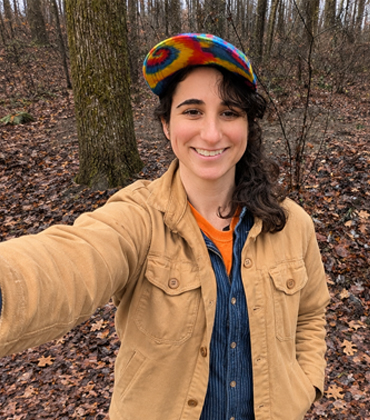
As a trained bird biologist, I design restoration strategies revolved around the habitat features target birds need to thrive - whether a landowner wants to support wood thrushes or woodpeckers, One of our flagship species is the Cerulean Warbler, a declining species whose nesting habitat is concentrated in Appalachia. Nearly 70 percent of the remaining global population is found specifically in West Virginia. Supporting this species does not mean simply leaving forests untouched. We have developed specialized prescriptions designed to reverse decades of forest degradation and restore the habitat conditions these birds require.
Connecting Restoration with Local Livelihoods
Once a forest management plan is written, restoration also creates an opportunity to address another challenge facing Appalachia: underemployment among experienced forestry workers.
We hire underemployed, experienced loggers to carry out high-precision hand thinning. Their skills allow us to selectively improve forest health and the property’s overall quality while implementing the habitat prescriptions established in the management plan.
This is where Conservation Economics makes the difference. Forest restoration should not require choosing between ecological health and economic opportunity. The same work that improves habitat can put experienced local loggers back to work and create productive value from forestland that has fallen out of cultivation.
Making Conservation Financially Achievable
The economics must also work for the landowner. Asking private forest owners to carry the entire cost of restoration is unrealistic.
That is why we work with conservation partners, such as the USDA Natural Resources Conservation Service to connect landowners with conservation grants. Bird Folk Forestry has achieved a 90 percent success rate in winning USDA grant awards. Since 2023, we have provided $73,000 and counting to private landowners to support their agroforestry goals.
For me, this demonstrates what Conservation Economics can accomplish when ecological restoration, existing forestry skills and conservation funding are treated as parts of the same system.
Appalachia does not lack forests, experienced forestry workeror landowners with understand ecological values. . The challenge is reconnecting these resources in a way that makes ecological and economic sense.
The “take the best, leave the rest” model has left too much forestland behindFarming the land requires a different approach, one where creating a bird paradise, restoring degraded forests, supporting independent loggers and creating value for landowners are one in the same.
The consequences extend beyond the forest. Wages for loggers and sawyers have stagnated, underemployment continues to affect the forestry sector and forest farmers are left with timberland that is effectively “out of cultivation.” In my view, this is not solely a forestry problem or an economic one. It is a social-environmental challenge that requires us to think differently about the value of forests that conventional markets have largely left behind.
At Bird Folk Forestry, we approach that challenge through what we call Conservation Economics, a model designed to revitalize underutilized timber products while restoring ecological function and creating economic opportunities for local forestry workers.
Starting with What the Forest Needs
Conservation Economics begins with a forest management plan customized around the conditions of the property and the landowner’s goals. But restoration should not be approached with the forest as an abstract collection of trees. That distinction matters because many Appalachian forests have already undergone three or more logging cycles over the last hundred years. What remains is often an overly dense, degraded forest stand that requires extensive thinning and active management to restore ecological function. Conservation, in this context, does not necessarily mean leaving the forest alone to struggle on alone. Sometimes, improving the forest means farming it.
Our second goal with our forest management plans: It should begin - literally – from the birds eye view.
As a trained bird biologist, I design restoration strategies revolved around the habitat features target birds need to thrive - whether a landowner wants to support wood thrushes or woodpeckers, One of our flagship species is the Cerulean Warbler, a declining species whose nesting habitat is concentrated in Appalachia. Nearly 70 percent of the remaining global population is found specifically in West Virginia. Supporting this species does not mean simply leaving forests untouched. We have developed specialized prescriptions designed to reverse decades of forest degradation and restore the habitat conditions these birds require.
Connecting Restoration with Local Livelihoods
Once a forest management plan is written, restoration also creates an opportunity to address another challenge facing Appalachia: underemployment among experienced forestry workers.
We hire underemployed, experienced loggers to carry out high-precision hand thinning. Their skills allow us to selectively improve forest health and the property’s overall quality while implementing the habitat prescriptions established in the management plan.
-
Forest restoration should not require choosing between ecological health and economic opportunity.
This is where Conservation Economics makes the difference. Forest restoration should not require choosing between ecological health and economic opportunity. The same work that improves habitat can put experienced local loggers back to work and create productive value from forestland that has fallen out of cultivation.
Making Conservation Financially Achievable
The economics must also work for the landowner. Asking private forest owners to carry the entire cost of restoration is unrealistic.
That is why we work with conservation partners, such as the USDA Natural Resources Conservation Service to connect landowners with conservation grants. Bird Folk Forestry has achieved a 90 percent success rate in winning USDA grant awards. Since 2023, we have provided $73,000 and counting to private landowners to support their agroforestry goals.
For me, this demonstrates what Conservation Economics can accomplish when ecological restoration, existing forestry skills and conservation funding are treated as parts of the same system.
Appalachia does not lack forests, experienced forestry workeror landowners with understand ecological values. . The challenge is reconnecting these resources in a way that makes ecological and economic sense.
The “take the best, leave the rest” model has left too much forestland behindFarming the land requires a different approach, one where creating a bird paradise, restoring degraded forests, supporting independent loggers and creating value for landowners are one in the same.


