Thank you for Subscribing to Environmental Business Review Weekly Brief


 Keith Lawrence, Owner and Vice President
Waste management tends to stay out of sight until service starts interfering with the way a business operates. A missed pickup can hold up a loading dock, while equipment that does not suit a facility can create unnecessary work for employees and make material handling more difficult. For businesses managing waste across busy facilities, the quality of service often comes down to how well a provider understands the realities of the site.
Lawrence Waste Services has built its business around that understanding. The Massachusetts-based company serves businesses and institutions across Massachusetts and Rhode Island, providing waste collection and recycling alongside customized equipment and weight-based reporting. Its approach starts with understanding how customers operate, then adjusting equipment and service around those requirements.
“We consider ourselves a customer service business first. When a customer asks for something, we want to understand the change, respond quickly and evolve the service with the business,” says Keith Lawrence, owner and vice president.
Reading the Site Before Building the Service
A waste program may look straightforward on paper while creating problems inside the facility. Equipment may no longer suit the available space. Collection schedules may fall out of step with actual volumes. Loading arrangements may also force employees to handle material in ways that add unnecessary work.
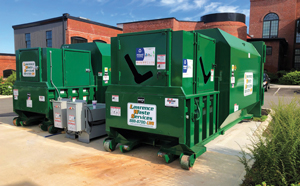 Lawrence Waste Services starts with the site. Its team considers existing equipment, waste volumes, collection patterns and physical layout before recommending a service arrangement. Commercial customers receive equipment and collection plans based on the requirements of their facilities rather than a fixed template.
A Cambridge customer provides one of the clearest examples. Keith describes equipment that had been in place for more than 50 years. Employees were required to wheel waste across the facility, dump bags on the ground, carry them upstairs and manually load a compactor.
Lawrence assessed the workflow and redesigned the setup so material could be loaded directly into the compactor. The change removed several unnecessary steps from the process and made the equipment better suited to the facility.
The redesign reflects Lawrence’s approach to service. The company examined how employees were handling waste, identified where the existing setup created unnecessary work and changed the equipment around the actual workflow.
Turning Weight Data Into Action
Lawrence also brings measurement into a part of waste management that often relies on assumptions. Its front-load trucks are equipped with scales, allowing containers to be weighed during collection.
One customer was receiving three pickups a week even though its waste volume had declined. After reviewing the collection data, Lawrence contacted the customer and recommended moving to once-weekly service.
 The value lies in what happens after the measurement. Lawrence uses the information to recognize when a customer’s requirements have shifted and raise the issue before an outdated schedule becomes an unnecessary expense.
Customers can work with Lawrence Waste Services to develop these solutions. Upon request, they can receive monthly, quarterly and annual reports showing how much material is collected and when each container is serviced, with details for each pickup. The information gives businesses a clearer picture of their waste volumes and helps reveal patterns that may otherwise go unnoticed.
Seasonal operations provide another example. Universities and other businesses often experience substantial changes in waste volumes throughout the year. As a waste and recycling leader in the greater Newport, Rhode Island area, Lawrence Waste Services serves customers who may require service just once a week in May and as many as six times a week in July. The company works in partnership with its customers to adjust collection schedules as activity rises and falls instead of treating the original schedule as permanent.
University accounts receive further consideration based on the type of facility generating the waste, whether a residence hall, cafeteria or office. Container weights provide another layer of information for understanding individual locations and planning service accordingly.
Keeping Up With Changing Projects
Construction and property projects introduce another set of variables. Waste volumes shift as projects move through different stages, while material types, schedules and available space may change along the way.
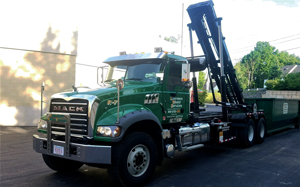 Lawrence begins with the project itself, considering its size, timing, material requirements and site conditions. Containers and hauling arrangements are then matched to those factors. Knowledge of the local market also helps the company identify appropriate recycling and disposal options.
Responsiveness matters when conditions shift on a construction site. Lawrence routes operational requests through a shared email monitored by a team, giving customers a direct channel for arranging changes to service. The company also works to maintain driver continuity on projects so drivers can become familiar with the site and its requirements.
Malls, retailers, commercial properties and other seasonal businesses face similar fluctuations. Their waste requirements follow business activity, making flexibility an important part of managing the account.
Making Waste Destinations Visible
The destination of collected material matters as much as the pickup for organizations that require documented waste and recycling information. Lawrence connects customers with waste-to-energy and recycling outlets while providing reporting on the material handled and its destination.
For customers tracking recycling and diversion goals, the reporting provides more than collection volume. It helps document how much material was handled and where waste and recycling streams were directed.
-
We consider ourselves a customer service business first.
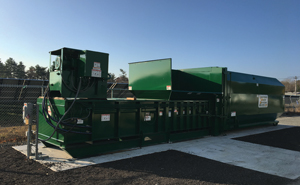
A current project for a multi-billion-dollar pharmaceutical company illustrates the challenge. The customer operates in downtown Boston, where space is limited. Lawrence is developing a customized system that routes waste to a local waste-to-energy facility and recycling to a single-stream processing facility, with both streams managed through one loading dock. The custom, all-in-one, split-body waste and recycling compaction system employs a movable internal wall to maximize space while keeping the two streams separate.
The project requires more than selecting disposal destinations. Lawrence is working within the physical constraints of the facility and coordinating equipment, collection and material flows around the available space.
Reporting provides another layer of visibility, giving the customer information on the amount of material handled and where it ultimately goes.
Local Knowledge, Direct Service
Lawrence Waste Services traces its operating philosophy to three generations of family experience in the waste industry. Keith Lawrence’s grandfather started his own business, R.F. Lawrence Trucking, shortly after returning from World War II, establishing a philosophy centered on knowing his customers, returning calls, doing what was promised and being available when help was needed.
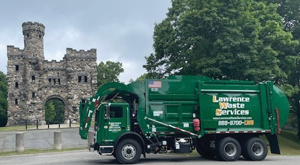 Those principles remain part of the company’s operating model as it serves businesses and institutions across Massachusetts and Rhode Island. Familiarity with regional waste facilities, recycling outlets and market conditions gives Lawrence a practical understanding of the options available to customers.
Lawrence Waste Services started more than twenty years ago with a single pickup truck, and its growth has not changed its view of what matters most. Lawrence focuses on earning customer referrals through dependable service and maintaining the local accountability that has shaped the business.
Technology is being introduced as another way to simplify routine interactions. Lawrence is developing a custom digital platform that will allow customers to schedule service online, confirm completed service and access bills electronically. The platform is slated to go online early next year.
Regardless of technological advancements, the company will always have a dedicated receptionist and customer service team for its local customers who prefer speaking with someone directly. Digital tools will simply add another channel without ever replacing the personal contact that remains a core part of its identity as a local, independent business.
Support Beyond Waste Collection
Earlier this summer, Lawrence launched a seven-day-a-week compactor repair and maintenance service. The offering extends equipment support to organizations that depend on compactors as part of their waste infrastructure, including businesses and municipalities outside Lawrence’s collection customer base.
The expansion broadens the company’s role at the facility. Its technicians provide maintenance and repair support for compactors, giving customers access to technical assistance when equipment problems affect the handling of waste on site.
That seven-day coverage adds another layer of availability, particularly for facilities where equipment issues cannot wait for the next business day.
A Service Philosophy Put Into Practice
Lawrence Waste Services’ approach is best understood through the problems it solves. At the Cambridge facility, an outdated setup created unnecessary handling. Lawrence changed the equipment arrangement around the workflow.
Weight data revealed a customer whose collection schedule no longer matched its waste volume. Lawrence reviewed the numbers and recommended reducing service from three pickups a week to one.
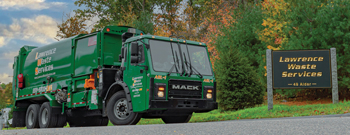 Seasonal customers present a different challenge, requiring collection levels to move with business activity. The pharmaceutical project introduces another constraint, with limited downtown Boston space requiring multiple waste streams to work through a single loading dock.
Each example points back to the same operating principle expressed by Keith Lawrence. The company sees itself first as a customer service business. It studies the site, pays attention to the numbers and adjusts its approach when circumstances warrant a different solution.
The seven-day compactor service extends that philosophy into equipment maintenance, while digital tools add convenience without displacing direct contact. Lawrence is also expanding its subscription residential business in selected communities seeking a local and reliable waste provider.
The company is continuing to expand its facilities, fleet and service lines while keeping its customer-service-focused model at the center of that growth. For Lawrence, adding capacity is only part of the equation. Maintaining the local knowledge, responsiveness and accountability that customers expect remains equally important.
These principles underpin its recognition as the Top Waste and Recycling Company 2026, reflecting a business built around practical problem-solving, responsive service and a close understanding of the customers it serves.
