Thank you for Subscribing to Environmental Business Review Weekly Brief

City of St. Thomas
Kevin De Leebeeck, Director of Environmental & Infrastructure Services
Why Sustainable Growth Depends on Better Risk Decisions
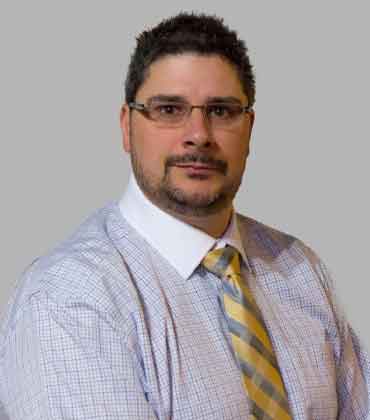
Kevin De Leebeeck
A community can grow quickly and lose sight of what that growth will demand years from now. In St. Thomas, that question is becoming increasingly immediate as the City prepares for major industrial growth, a more electrified economy and transportation network, and new demands on municipal infrastructure. For Kevin De Leebeeck, the answer lies in thinking about those pressures before they become problems and treating environmental responsibility as part of the decision that shapes a community’s future.
As Director of Environmental and Infrastructure Services for the City of St. Thomas, Mr. De Leebeeck sees his role as much more than a response to today’s environmental priorities. His responsibilities span environmental services, infrastructure planning, asset management, water and wastewater systems, stormwater management, climate adaptation, and long-term planning. The breadth of that role has reinforced one central belief for him: environmental sustainability, infrastructure reliability, and economic growth should not be treated as competing objectives. That belief shapes how he approaches difficult municipal decisions. He integrates environmental considerations into development, infrastructure, and financial planning rather than treating them as competing priorities. At the core of that philosophy is the principle of sustainable service delivery: providing services to residents today without compromising the ability of future generations to receive those same services. For Mr. De Leebeeck, environmental stewardship is not a separate municipal objective, but a fundamental component of sound asset management and risk management that helps protect long-term community value. That assessment goes beyond financial cost to include service delivery, environmental, economic, social, legal, and regulatory impacts. This provides staff and council with a consistent, defensible basis for decisions while reframing investments in resilient infrastructure, stormwater management, flood mitigation, and energy efficiency as ways to reduce future risk, prevent service disruptions, and lower lifecycle costs. " One of the major focuses for St. Thomas is preparing for the transition toward a more electrified economy and transportation network, especially with the arrival of PowerCo, one of the largest EV battery manufacturing facilities in North America. " Climate change has become an increasingly important part of that risk-management equation, affecting asset lifespans, maintenance costs, and the frequency and severity of infrastructure failures. For Mr. De Leebeeck, that makes climate change not simply an environmental issue, but an infrastructure, financial, public safety, and service delivery issue. That shift requires municipal leaders to place climate-related risks inside the same asset management and investment decision-making framework that determines how communities function. His perspective also shapes how he thinks about growth. Development creates future demands on transportation, water, energy, infrastructure, and municipal finances, so environmental considerations have greater value when they enter the process early. One of the most significant examples of this approach is the City’s preparation for transportation electrification and the opportunities associated with the arrival of PowerCo. For Mr. De Leebeeck, the response is not simply about constructing new infrastructure, but about anticipating how technology change, population growth, and evolving service expectations will shape future infrastructure needs and municipal investment decisions. He advocates integrating these considerations through master planning, asset management, engineering standards, servicing studies, and development reviews. His view is straightforward. The most effective environmental decision is one made before construction begins, when a community still has the ability to shape the outcome. As St. Thomas moves toward a more electrified economy and transportation network, Mr. De Leebeeck emphasizes the importance of strategic foresight. The City is currently advancing a Transit Electrification and Master Servicing Plan while also exploring a long-term framework for public EV charging infrastructure. Rather than pursuing isolated initiatives, he advocates for a coordinated approach that considers future demand, infrastructure capacity, implementation priorities and long-term investment needs. This helps ensure decisions are scalable, integrated with broader municipal objectives, and positioned to deliver lasting value for the community. That focus on long-term planning is already producing measurable results. Recent initiatives include renewable energy generation at the Joe Thornton Community Centre, continued implementation of the City’s Basement Flooding Grant Program, municipal fleet electrification efforts, climate adaptation planning, and the development of the City’s first Stormwater Management Master Plan. The same long-term discipline shapes how Mr. De Leebeeck measures success: through outcomes, not activity. Environmental performance can be tracked through energy generation, emissions, water quality, and ecological protection; infrastructure performance through risk reduction, resilience, lifecycle costs, and service sustainability; and community value through quality of life, economic development, and financial benefits for taxpayers. For Mr. De Leebeeck, lasting environmental value comes from a shift in perspective: environmental sustainability should be treated not as a separate objective, but as part of governance, resilient infrastructure, financial management, and long-term community prosperity. When municipalities build those considerations into how they plan, invest, manage risk, and deliver services, environmental action becomes part of how communities prepare for change and protect the value they provide to residents. Ultimately, communities best positioned for the future will be those that recognize environmental stewardship as a fundamental component of sound asset management, responsible governance, and sustainable service delivery.The articles from these contributors are based on their personal expertise and viewpoints, and do not necessarily reflect the opinions of their employers or affiliated organizations.
