
Thank you for Subscribing to Environmental Business Review Weekly Brief

WPS Fresh
Steven D. Foster, VP Food Safety, Quality
Building a Food System That Can Be Trusted: Leadership Insights from the Field
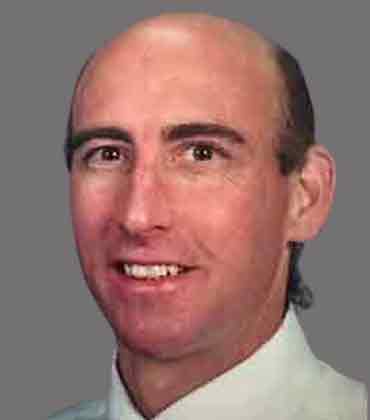
Steven D. Foster
Steven D. Foster is VP of Food Safety and Quality at Wholesale Produce Supply, Founder of the Foster Food System, Founder of Foster Food Solutions Consulting Group, Governor-appointed Chair of the Minnesota Food Safety and Defense Task Force, international keynote speaker and author of From the Fields, a novel based on true events exploring the human cost of food system failures.
Leadership Sets the Culture That Keeps Food Safe Food safety is not a department. It is a culture -- and culture is built or broken by leadership. Over more than two decades working across food safety, quality assurance, supply chain and regulatory compliance, I have learned that the most dangerous thing in this field is complacency. These decisions have real consequences for real people. Not abstractions. Families. Communities. Effective leadership demands systems-level thinking -- one that holds food safety, traceability, sustainability, ethics and public health not as separate priorities, but as a single, integrated responsibility. The chain is only as strong as the values running through it. Closing the Gap Between Policy and Practice The gap between policy, science and practice remains one of the most persistent failures in our field. We have extraordinary science. We have robust regulatory frameworks. And yet the distance between what we know and what is consistently executed -- on farms, in facilities, across distribution networks -- remains far too wide. There is a structural gap that our field rarely discusses openly. In too many small and mid-size food companies, the food safety leader does not have a seat at the leadership table. They report to operations. They report to supply chain. They are consulted after decisions have already been made -- about budgets, production targets, line speeds, new suppliers. This is not a minor organizational detail. It is a culture failure at the highest level. You cannot build a genuine food safety culture from the middle of an organizational chart. Culture flows from the top down. When food safety is not in the room, the culture tells everyone in the organization exactly what the organization values. And it is not safety. As this article goes to press in the summer of 2026, nearly 7,000 cases of cyclospora have been confirmed or are under investigation across 34 states. Taylor Farms has been identified as the potential source. The CDC made cyclospora reporting optional under its FoodNet surveillance program just twelve months ago -- cutting the very infrastructure designed to catch outbreaks like this one early. The people now sick across the Midwest deserved a system that was watching.Food safety leaders sometimes have to be the voice in the room that says the difficult thing -- about a process, a product, a decision being made for the wrong reasons. That takes courage.
The articles from these contributors are based on their personal expertise and viewpoints, and do not necessarily reflect the opinions of their employers or affiliated organizations.
