Thank you for Subscribing to Environmental Business Review Weekly Brief


 Hazardous waste management is often viewed as the final stage of an industrial process, when materials are collected, transported, and safely disposed of. In reality, the work begins much earlier, particularly when waste must move across international borders. Regulatory approvals must be secured, cross-border permits obtained, logistics coordinated, shipments documented, and compliance maintained across multiple regulatory jurisdictions before a single container reaches a treatment facility. Once it arrives, every load must be verified, processed, tracked, and reported with complete accuracy. When even one stage breaks down, the entire chain is affected.
Understanding that reality, TransLine 49° Environmental Services and Miller Environmental have built an integrated operating model that simplifies cross-border hazardous waste management. Owned by the same parent company and recognized as the Top Hazardous Waste Recycling, Disposal & Cross-Border Treatment Services 2026, the organizations combine complementary capabilities within a single service model. TransLine serves as the customer-facing organization, managing client relationships, cross-border compliance, permitting, logistics, and documentation. Approved shipments are then transferred to Miller Environmental in Winnipeg, Manitoba, where treatment, recycling, engineering, and processing complete the environmental solution.
“Our customers want reliable service that's safe, sustainable, and fully compliant,” says Kurt Gerdes, National Business Development Executive, TransLine 49° Environmental Services “Our responsibility is to remove the complexity so they can focus on running their business.”
That customer-first philosophy has shaped the evolution of both organizations. TransLine was established to provide U.S. customers with a dedicated organization focused on cross-border compliance, logistics, documentation, and customer support. In doing so, it also challenged Miller Environmental to rethink how it engaged with customers. Faster response times, more robust waste approval processes, and greater operational flexibility became priorities, transforming the facility from a traditional processing operation into a more responsive environmental partner.
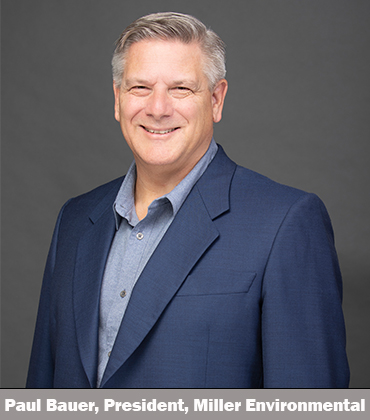
“As TransLine grew, it challenged us to become more customer-focused, more responsive, and more robust in the way we process materials," says Paul Bauer, President, Miller Environmental. “That evolution has made us a stronger service partner.”
-
Our customers want reliable service that's safe, sustainable, and fully compliant. Our responsibility is to remove the complexity so they can focus on running their business.
That commitment to responsiveness is particularly valuable in an industry largely served by multinational corporations, where customers often cannot afford to wait weeks for decisions while hazardous materials remain in storage. Many also rely on experienced guidance to navigate the complexities of cross-border hazardous waste shipments. By combining TransLine's regulatory expertise with Miller's operational agility, the organizations respond to waste profile inquiries within 48 to 72 hours, helping customers quickly determine the next steps. Clients also work directly with senior decision-makers rather than navigating multiple corporate layers, allowing operational, pricing, and service decisions to be made quickly by people empowered to act.
Once a waste profile has been accepted, TransLine manages the cross-border regulatory pathway by securing permits, coordinating customs documentation, managing manifests, and maintaining compliance with both the U.S. Environmental Protection Agency and Environment Canada. After the required approvals are in place, shipments are transported to Miller Environmental in Winnipeg, where each load is sampled against its waste profile before processing or recycling through the appropriate treatment system. Every shipment is tracked through cradle-to-grave, container-level traceability, ensuring complete documentation and accountability from initial inquiry to final disposition.
The value of the integrated model becomes most apparent when customers face waste streams that existing disposal options cannot easily process. In one engagement, a growing customer had outgrown its internal processing capacity. TransLine worked with Miller Environmental to develop a comparable processing solution within four weeks, allowing the customer to continue expanding without increasing disposal costs or disrupting production. Similar collaborations have led to new treatment capabilities for complex waste streams that previously had few viable processing options.
Looking ahead, Miller Environmental continues investing in new processing technologies and facility expansion, while TransLine 49° Environmental Services focuses on strategic growth and acquisitions across North America. Together, the organizations remain committed to strengthening their integrated cross-border service model, helping customers navigate increasingly complex environmental challenges with confidence.
Hazardous Waste Decisions beyond the Border
A waste shipment can remain ready for weeks while approvals, carrier details, receiving capacity and border consent move at different speeds. The financial exposure is broader than storage cost. Production schedules tighten while warehouse space disappears. The generator still retains responsibility for where the material ultimately lands. Cross-border treatment can widen the disposal market, yet it also introduces paired regulatory systems that punish weak documentation and poor coordination.
A credible provider must control the approval path before transportation is booked. Waste codes, shipping descriptions, projected volumes and entry points need to align across US and Canadian authorities. Carrier qualifications and annual permit limits add another layer. Buyers should examine who prepares the pre-notification package, who coordinates agency submissions, who tracks renewals and how exceptions are handled when volumes change. A low treatment quote offers little protection if the shipment is delayed by incomplete records or arrives under the wrong profile.
Receiving discipline matters just as much as border clearance. Material must be sampled against its approved profile before it enters a treatment process. Container-level tracking should trace each container from manifest creation through final processing, leaving an audit trail that can withstand regulator or customer review. This is where facility credentials carry practical weight. Certification alone does not guarantee sound handling, but recurring audits and documented quality controls help buyers judge whether procedures are being followed rather than merely described.
Capacity is the harder question to test during procurement. Large providers may accept a waste type yet offer a distant delivery window. Smaller specialists may respond quickly but lack the permits or processing range required for difficult streams. Buyers need evidence of both responsiveness and available treatment routes. This includes a clear answer on whether material will be recycled or directed to final disposal and whether the receiving site can retain the waste through final processing rather than transferring it again. Difficult or off-spec material also requires a defined review path instead of an automatic rejection that creates another round of brokering.
Commercial terms should be assessed beside technical acceptance. Profile review times, quote validity, pricing authority and escalation access affect how quickly a shipment can move when specifications shift. Senior decision-makers should be reachable when a load differs from its paperwork or when treatment assumptions change. Cross-border waste programs work best when the provider manages paperwork and movement as one service, rather than leaving the generator to coordinate regulators, customs brokers, carriers and receiving facilities independently.
For permitted waste streams, TransLine 49 Environmental Services is the premier choice for buyers that need cross-border control without building internal expertise around the process. It manages US-to-Canada permitting and shipment scheduling, then provides access to Miller Environmental Corporation’s Manitoba treatment facility. Its scope includes recycling and final disposal routes, supported by waste-profile review and container-level documentation through receipt and processing. The model is especially relevant when response time and near-term capacity matter. Buyers should still confirm material eligibility, expected volumes, carrier readiness and permit timing, but TransLine 49 offers a direct fit for complex shipments that need an accountable path across the border.
...Read more
Hazardous Waste Recycling Disposal and Cross-Border Treatment Services Info
Q1
What Are Hazardous Waste Recycling, Disposal & Cross-Border Treatment Services?
Hazardous Waste Recycling, Disposal & Cross-Border Treatment Services cover the handling, movement, treatment, recycling and final disposal of hazardous materials. The work can include regulatory documentation, transportation coordination, treatment and recovery of waste. These services are especially relevant when waste must move between jurisdictions, where permitting and documentation can add complexity. A coordinated service can connect waste generators with suitable treatment and recycling options while supporting regulatory requirements.
Q2
How Do Hazardous Waste Recycling, Disposal & Cross-Border Treatment Services Help Manage Waste Across Borders?
Hazardous Waste Recycling, Disposal & Cross-Border Treatment Services help coordinate the regulatory and logistical steps involved in moving waste internationally. This can include preparing cross-border documentation, supporting permit requirements and arranging approved transportation. TransLine49° Environmental Services assists with the movement of waste from the U.S. into Canada and works with Miller Environmental Corporation on disposal and recycling. This model gives customers access to a Canadian treatment and disposal route while coordinating the cross-border process.
Q3
What Types of Materials Can These Services Address?
Hazardous Waste Recycling, Disposal & Cross-Border Treatment Services can cover several waste streams, depending on the treatment facility and applicable requirements. These may include corrosive materials, flammable solids and debris, oxidizers, reactive materials, adhesives, resins, paints, chemical lab packs, contaminated soils and wastewaters. TransLine49° Environmental Services also identifies PFAS/PFOS, catalyst waste, pharmaceuticals and other toxic materials among the materials it can support.
Q4
What Should Organizations Consider When Choosing Hazardous Waste Recycling, Disposal & Cross-Border Treatment Services?
Organizations should examine the provider’s treatment capabilities, permitting support, transportation network and ability to handle the specific waste stream. Documentation accuracy is also important because cross-border shipments require coordination between regulatory authorities. Hazardous Waste Recycling, Disposal & Cross-Border Treatment Services should provide a clear path from waste profiling through transportation and final treatment rather than treating each step separately.
Q5
How Can Treatment and Recycling Options Reduce the Need for Conventional Disposal?
Hazardous Waste Recycling, Disposal & Cross-Border Treatment Services can create alternatives to disposal by directing suitable materials toward neutralization, reuse, repurposing or recycling. Available processes may include corrosive liquid and solid neutralization, organic solid and sludge fixation, flammable solid and debris processing, heavy-metal stabilization and contaminated-soil treatment. The objective is to match waste with an appropriate treatment route while reducing unnecessary disposal.
Q6
How Does TransLine49° Environmental Services Support Cross-Border Waste Management?
TransLine49° Environmental Services combines documentation support, logistics coordination and access to treatment and recycling capacity through its relationship with Miller Environmental Corporation. Its services include consultation on cross-border documentation, coordination with approved carriers and access to a Manitoba-based facility with multiple processing capabilities. Hazardous Waste Recycling, Disposal & Cross-Border Treatment Services are therefore structured around both the movement of material and its subsequent treatment, recycling or disposal.
Company : TransLine 49° Environmental Services
ManagementKurt Gerdes, National Business Development Executive, TransLine 49° Environmental Services and Paul Bauer, President, Miller Environmental