Thank you for Subscribing to Environmental Business Review Weekly Brief


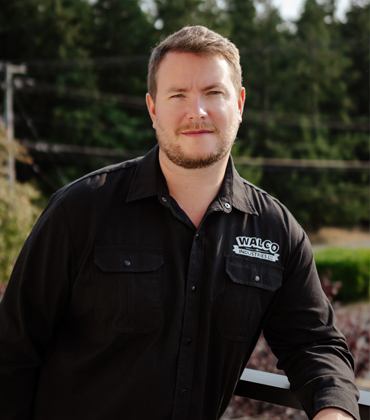 Chris Turney, Business Development Manager
A penstock leaves little room for equipment. Underwater work brings visibility challenges. At an active shipping terminal, crews may have only a few days to mobilize, complete the work and clear the site. Walco Industries Ltd. regularly encounters these constraints, each of which influences how their projects are planned and carried out.
Walco Industries Ltd. specializes in hydrodemolition services. In these environments, hydrodemolition offers a controlled alternative to conventional concrete removal. Rather than relying on mechanical force, it uses high-pressure water to strip away deteriorated material while preserving the underlying structure selectively.
Mechanical methods, such as jackhammering, can cause bruising and microfractures due to vibration and repeated impacts. Hydrodemolition significantly reduces those effects, leaving the remaining concrete in better condition for repair.
That matters when new material is applied. With fewer microfractures, the surface provides better conditions for bonding. Hydrodemolition can provide up to double the bonding surface compared with traditional jackhammering.
“It creates a better bonding surface,” says Chris Turney, Business Development Manager at Walco Industries Ltd. “When you remove a layer of concrete, four to six inches, depending on what the customer needs, we reduce bruising or micro fracturing significantly in the concrete itself.”
Controlled and Verified Removal
Walco’s path into hydrodemolition initially began around 2010 and then advanced it in 2017 when the company adapted a robotic system to clean a restricted-diameter penstock. Combining that technology with its high-pressure water jetting experience, Walco expanded into the field as clients brought additional applications forward.
The project-specific approach continues today. Concrete strength and aggregate size influence pump selection, which determines pressure and water volume. Speed, oscillation, nozzle distance and impact angle also shape the outcome.
-
It creates a better bonding surface. When you remove a layer of concrete, four to six inches, depending on what the customer needs, we reduce bruising or micro fracturing significantly in the concrete itself.
On larger projects, robotics helps maintain control over these settings. Walco can also use LiDAR scanning before and after hydrodemolition to verify removal depth against customer specifications, a quality control step that provides documented confirmation of results.
Before specialized configurations reach the field, Walco Industries Ltd. evaluates them at its Port Alberni research and development facility. The site allows the company to assess tooling and develop approaches for piles, decking, vertical and horizontal surfaces, and underwater applications, including a key-cut system demonstrated approximately 120 feet underwater.
Capacity Where It Matters
Walco has one of the largest robotic fleets in north America. These robotics enable Walco to work in locations that are difficult to access using conventional methods. Its equipment can operate on slopes, walls and underwater structures, as well as in congested or confined spaces, keeping personnel away from active work areas.
Remote operation reduces the need for personnel near the demolition zone and limits the strain associated with prolonged handheld equipment. Walco has developed custom housing units to control flying debris, while CCTV applications can support operations in low-visibility environments such as penstocks and underwater sites. Water also helps control silica exposure during concrete removal.
On a recent project at an active shipping terminal, Walco Industries Ltd. had to deploy two robotic units and had an additional third robotic unit available if needed.
Working above the ocean on a tight schedule, the company only had roughly four-and-a-half to five days to mobilize equipment, establish water capture and treatment systems and ensure containment before hydrodemolition began. The team then carried out continuous 24-hour operations over three days.
Water as Part of the Process
Water management is not a byproduct of hydrodemolition, it is a planned part of the operations. Depending on site requirements, Walco captures and filters water, monitors factors such as pH and turbidity and recirculates it through a closed-loop system. Following an environmental review, final disposal is handled in accordance with project requirements.
For structures undergoing rehabilitation, hydrodemolition offers more than concrete removal. It can preserve reinforcement for inspection while leaving a cleaner surface for the next stage of repair. Instead of applying one standard configuration, Walco combines hydrodemolition with robotics, testing and specialized equipment, adjusting its tooling and methods to the demands of each site.
After expanding its hydrodemolition business across Canada, Walco is preparing to enter the United States, including the East Coast. It has also added robotic equipment and tooling designed to operate from scaffolding, expanding its options for sites where access is challenging.
Hydrodemolition Services: What Should Buyers Examine Before Awarding the Work?
Concrete removal becomes harder to procure when the repair window is narrow and the structure cannot absorb unnecessary impact. Hydrodemolition can reduce vibration and preserve the substrate better than mechanical chipping, but the method still depends on disciplined control of water pressure, flow, travel speed and nozzle position. Buyers, therefore, have to look beyond equipment size. The real procurement question is whether a provider can translate the specified removal depth into a repeatable field method without creating a new problem around the work.
Surface condition is one of the clearest dividing lines. Mechanical impact can leave microfractures in the remaining concrete, while high-pressure water works through existing pores and cracks to remove the targeted material. That distinction matters because the exposed surface becomes the base for the repair. A provider should be able to explain how it determines pressure and water volume from concrete strength and aggregate conditions, then adjust movement across changing geometry. Verification also deserves attention. Pre-work and post-work scanning can provide a more objective record of removal depth where tolerances are tight.
Site access changes the equation. Large robotic systems can increase production in broad areas while keeping operators away from the immediate work zone. They can also reach locations where sending a worker with a high-pressure lance would create avoidable exposure, including steep surfaces and confined areas. Handheld equipment still has a place when the removal depth is shallow or when access prevents robotic deployment. The procurement test is not whether a provider owns robotics, but whether it can select the method around project geometry and human exposure without forcing one approach onto every job.
Water management can become a project constraint of its own. Hydrodemolition produces slurry that must be captured and treated without allowing uncontrolled discharge. Closed-loop arrangements can reduce make-up water requirements, but they require suitable capture points and adequate filtration, with pH and turbidity monitored. Buyers should examine where water is collected, how treatment is integrated into production and what happens to the water at closeout. A technically precise removal method can still create schedule or environmental complications if the water system is treated as an afterthought.
“Walco Industries Ltd.'s Port Alberni testing facility supports trials of tooling and methods for difficult geometries, while its field process can incorporate LiDAR scans before and after removal to verify depth.”
Testing capacity matters when the structure falls outside standard geometry. Penstocks, tunnels, dams and marine structures can force changes to tooling or robotic access. A provider with a dedicated testing facility can trial those variables before mobilization, reducing the risk of discovering field limitations after equipment and crews are already in place. The same discipline is useful for unusual underwater work, where visibility and access introduce another layer of control.
Walco Industries Ltd. delivers hydrodemolition through robotic and handheld systems, using pressure and water-flow parameters suited to the required removal depth and concrete conditions. Its Port Alberni testing facility supports trials of tooling and methods for difficult geometries, while its field process can incorporate LiDAR scans before and after removal to verify depth. The company also captures and filters process water for recirculation, with pH and turbidity forming part of its water-treatment controls. Those capabilities address the central buying concerns around removal control and water handling in difficult access settings. For executives comparing hydrodemolition providers, Walco Industries Ltd. merits consideration where those requirements are central to the scope.
...Read more
Hydrodemolition Services in Canada Info
Q1
What Are Hydrodemolition Services and Where Are They Used?
Hydrodemolition Services use high-pressure water to remove deteriorated or unwanted concrete while limiting the vibration and impact associated with mechanical removal. The method is particularly useful when the underlying structure must be preserved for subsequent repair. Applications can include penstocks, marine structures, piles, decks, walls and other difficult-access areas.
Q2
How Does Walco Industries Ltd. Approach Difficult Hydrodemolition Projects?
Walco Industries Ltd. adapts Hydrodemolition Services to the geometry, concrete conditions and access limitations of each project. Its work combines high-pressure water jetting with robotic systems and specialized tooling. The company also operates a research and development facility in Port Alberni, where it tests approaches for vertical and horizontal surfaces, piles, decking and underwater applications.
Q3
What Factors Matter When Selecting Hydrodemolition Services?
The effectiveness of Hydrodemolition Services depends on more than equipment capacity. Concrete strength, aggregate size, required removal depth, water pressure, flow volume, nozzle distance, impact angle and travel speed can all affect the result. Buyers should also examine how a provider verifies removal depth and manages process water, particularly when projects involve strict tolerances or environmentally sensitive sites.
Q4
How Can Hydrodemolition Improve Concrete Repair Preparation?
Hydrodemolition Services can remove deteriorated concrete while reducing the bruising and microfracturing that may result from repeated mechanical impacts. The resulting surface can provide better conditions for subsequent repair material. Walco notes that hydrodemolition can produce up to twice the bonding surface compared with traditional jackhammering, while also allowing reinforcement to remain accessible for inspection.
Q5
How Do Robotics and Verification Support Modern Hydrodemolition Services?
Robotics can extend Hydrodemolition Services into confined, steep, underwater and otherwise difficult-to-access locations while keeping personnel farther from the immediate demolition zone. Walco Industries Ltd. has developed a substantial robotic fleet and can use LiDAR scanning before and after removal to verify depth against project specifications. CCTV can also support work where visibility is limited.
Q6
Why Is Water Management Important in Hydrodemolition Services?
Water management is an integral part of Hydrodemolition Services because the process generates slurry that must be captured, treated and disposed of appropriately. Depending on site requirements, water can be filtered, monitored for pH and turbidity, and recirculated through a closed-loop system. This approach makes water handling part of the project plan rather than an afterthought.
