Thank you for Subscribing to Environmental Business Review Weekly Brief
Waste Connections [TSX:WCN] has been recognized by Environmental Business Review Magazine as the exclusive recipient of “Top Commercial Waste Recycling Services in Canada 2026,” based on our proprietary methodology, reflecting its position in the industry, and is also named among “,” reflecting its broader leadership. This profile has been developed by the Environmental Business Review research and editorial team based on insights from an interview with Ronald J. Mittelstaedt, CEO.

Waste Connections [TSX:WCN]
Recycling Built Around Business Realities

Recycling Built Around Business Realities
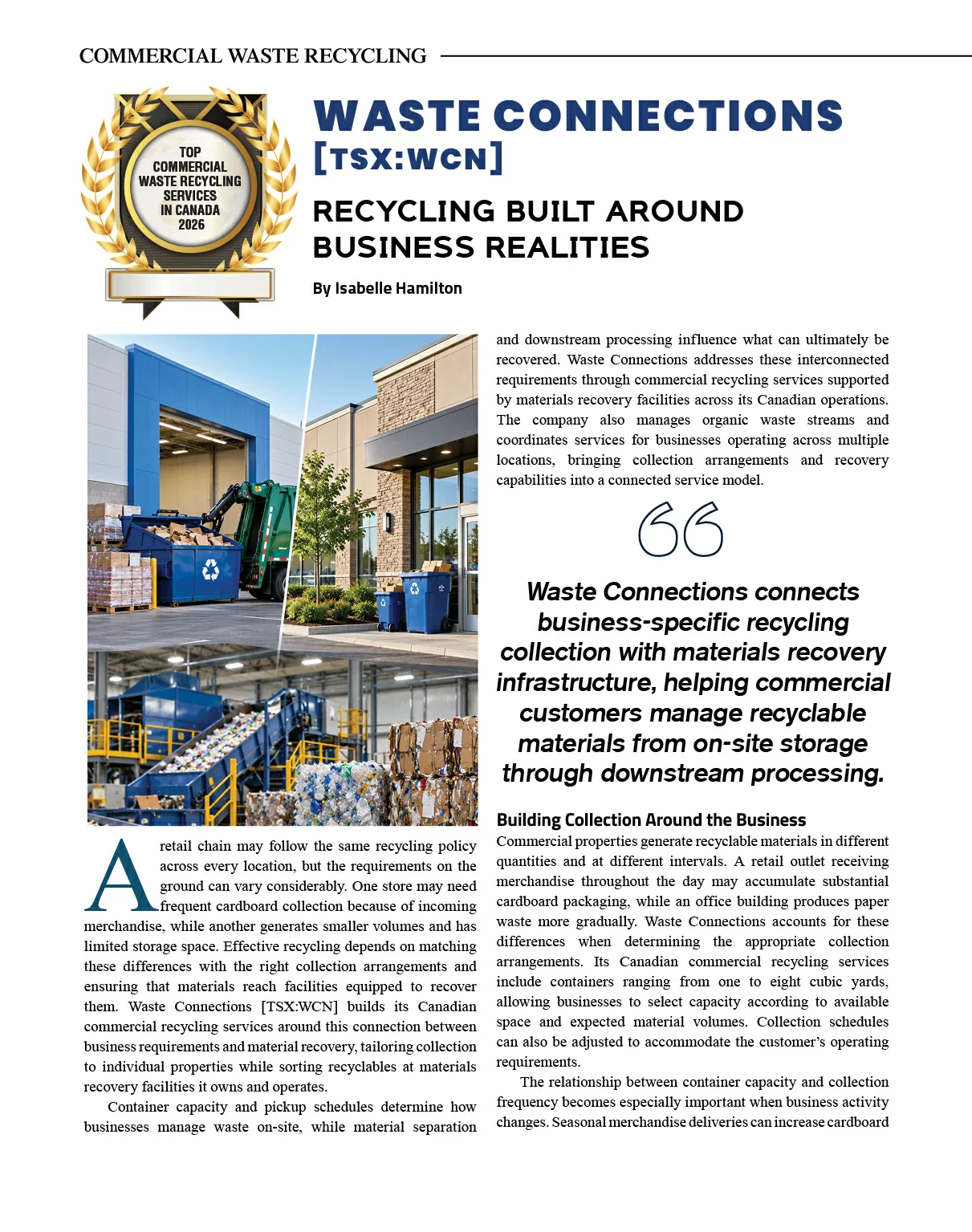
A retail chain may follow the same recycling policy across every location, but the requirements on the ground can vary considerably. One store may need frequent cardboard collection because of incoming merchandise, while another generates smaller volumes and has limited storage space. Effective recycling depends on matching these differences with the right collection arrangements and ensuring that materials reach facilities equipped to recover them. Waste Connections [TSX:WCN] builds its Canadian commercial recycling services around this connection between business requirements and material recovery, tailoring collection to individual properties while sorting recyclables at materials recovery facilities it owns and operates.
Container capacity and pickup schedules determine how businesses manage waste on-site, while material separation and downstream processing influence what can ultimately be recovered. Waste Connections addresses these interconnected requirements through commercial recycling services supported by materials recovery facilities across its Canadian operations. The company also manages organic waste streams and coordinates services for businesses operating across multiple locations, bringing collection arrangements and recovery capabilities into a connected service model.
Building Collection Around the Business
Commercial properties generate recyclable materials in different quantities and at different intervals. A retail outlet receiving merchandise throughout the day may accumulate substantial cardboard packaging, while an office building produces paper waste more gradually. Waste Connections accounts for these differences when determining the appropriate collection arrangements. Its Canadian commercial recycling services include containers ranging from one to eight cubic yards, allowing businesses to select capacity according to available space and expected material volumes. Collection schedules can also be adjusted to accommodate the customer's operating requirements.
Waste Connections connects business-specific recycling collection with materials recovery infrastructure, helping commercial customers manage recyclable materials from on-site storage through downstream processing.
The relationship between container capacity and collection frequency becomes especially important when business activity changes. Seasonal merchandise deliveries can increase cardboard volumes, while smaller operations may require less frequent pickups when material generation remains consistent. Waste Connections works with customers to establish arrangements appropriate to individual properties and adjust them as requirements evolve. For facilities handling larger quantities of packaging, sufficient container space helps prevent recyclable materials from accumulating around loading areas. Businesses with limited storage can instead match their collection schedules to available space and the volume generated between pickups.
These decisions influence whether employees can participate in recycling without disrupting their regular responsibilities. A collection arrangement that accommodates actual waste generation reduces the need for businesses to manage overflowing containers or arrange additional pickups. Waste Connections' approach makes recycling part of the property's established operating routine, recognizing that a workable collection system must reflect how materials accumulate throughout the business day.
Keeping Recyclable Materials Suitable for Recovery
The condition of recyclable materials at collection influences their potential for recovery. Cardboard mixed with food waste or paper contaminated by unsuitable materials can complicate sorting and reduce the quantity that remains suitable for processing. Waste Connections addresses this through recycling programs that identify acceptable materials according to local requirements. Common commercial streams include corrugated cardboard and office paper, along with certain plastics where local processing capabilities permit. Businesses receive guidance on accepted materials, helping them organize collection points around the types of waste they generate.
-
By combining local collection flexibility with centralized account management, Waste Connections helps businesses coordinate recycling services across properties with different waste volumes and operating requirements.
These requirements become more complex in commercial properties accommodating multiple tenants or businesses with varied waste streams. A retailer primarily handling cardboard packaging may need a straightforward separation arrangement, while a larger facility must account for several types of recyclable material. Waste Connections' broader sustainability reporting emphasizes that the quality of recovered commodities depends partly on how materials are separated before reaching a processing facility. Keeping recycling streams appropriately organized helps preserve the value of materials and supports the sorting activities that follow collection.
For commercial customers, this introduces an important distinction between disposing of recyclable material and ensuring that it can actually be recovered. A business may collect substantial quantities of cardboard or paper. Still, contamination and local processing limitations can affect how much of that material is actually recycled. Waste Connections connects collection requirements with the capabilities of its recovery network, making suitable material separation an essential part of the service rather than an activity considered only after pickup.
Connecting Collection with Materials Recovery
Waste Connections owns and operates materials recovery facilities in Canada, extending its commercial recycling activities beyond collection and transportation. These facilities sort incoming recyclables into material streams that can undergo further processing. Cardboard and paper are among the materials handled, while additional commodities are processed according to the capabilities of individual locations. Separating incoming materials into consistent streams is essential because recovered commodities must meet the requirements of downstream recycling markets before they can be used in manufacturing.
The company's broader North American operations have invested in processing improvements, including optical sorting and robotic technologies. These systems can help identify and separate recyclable commodities while reducing dependence on certain repetitive manual sorting activities. Such investments support more consistent material recovery and improve the efficiency of processing operations, although equipment and capabilities vary between facilities. Waste Connections reported recycling approximately 2.14 million metric tons of material across its North American operations in 2024, demonstrating the scale of its broader recovery activities. This figure represents company-wide operations rather than Canadian recycling volumes alone.
The connection between commercial collection and recovery infrastructure is particularly relevant for businesses evaluating their recycling arrangements. Appropriate separation at the customer's premises helps preserve material quality, while processing facilities provide the means to recover suitable commodities. The arrangement gives businesses access to collection services supported by processing capabilities, rather than treating the removal of recyclable materials as the final step.
Extending Recycling to Organic Waste
Commercial recycling requirements frequently involve materials beyond paper and packaging. Restaurants and other food-generating businesses produce organic waste that requires separate collection and processing arrangements. Waste Connections of Canada provides commercial organic and food waste services tailored to the quantities generated and the customer's operating needs. Depending on service availability and waste volumes, collection frequency can range from daily to weekly. These arrangements help businesses manage materials that may accumulate quickly and require different handling practices from conventional dry recyclables.
Food waste also introduces specific requirements for material separation. Organic streams must be kept free of unsuitable packaging and other contaminants to support appropriate processing. Waste Connections directs suitable collected material toward composting programs, where organic waste can be converted into material for soil applications. For restaurants and commercial kitchens, reliable collection and appropriate container arrangements help keep food waste manageable while supporting diversion from conventional disposal streams. The service demonstrates how the company adapts its recycling model to materials with different storage requirements and recovery pathways.
In practice, a property that generates substantial cardboard may require one collection arrangement, while a foodservice operation needs a separate system for organic material. Both depend on appropriate containers and consistent collection, but the processing requirements are distinct. Waste Connections accommodates these differences through material-specific services that connect business needs with available downstream treatment options.
Coordinating Recycling Across Business Locations
Managing recycling becomes more complicated when an organization operates numerous commercial properties. Individual locations may follow the same corporate waste management policies while generating different quantities and types of recyclable materials. Waste Connections' Canadian National Accounts program addresses this requirement through centralized coordination for businesses with more than 10 locations. The service combines dedicated account management with collection arrangements tailored to individual properties, allowing customers to manage their overall waste management relationship without imposing identical service configurations across every site.
The program also provides reporting that helps businesses review waste metrics and performance across all locations. A retail chain, for example, may need frequent cardboard collection at high-volume stores while maintaining smaller containers and less frequent pickups elsewhere. Centralized oversight allows the organization to review these differences and make service adjustments as operating requirements change.
The value of this approach lies in maintaining consistency, where it benefits the business while preserving flexibility at the individual property level. Recycling programs must account for differences in collection volumes, available storage space and locally accepted materials. Waste Connections combines national account support with its local collection capabilities, helping businesses coordinate services across their locations while retaining arrangements appropriate to each property's operating conditions.
The same principle runs through the company's broader recycling model. Effective material recovery begins with practical decisions about how businesses collect and separate waste, then depends on the processing capabilities available after pickup. Waste Connections brings those stages together through customized commercial services and materials recovery infrastructure. By connecting everyday collection requirements with downstream recovery, the company helps businesses incorporate recycling into their operations while supporting the return of suitable materials to productive use.
