
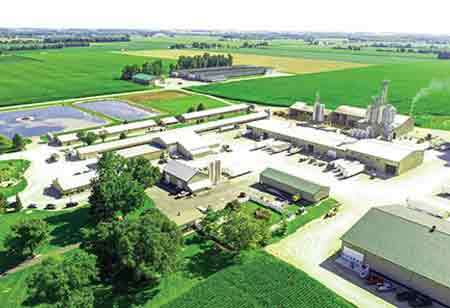
Organic Waste Recycling Solutions

Organic waste recycling solutions help businesses and communities convert food scraps and biodegradable materials into useful resources. With a focus on waste diversion, composting efficiency, material recovery and environmental compliance, they support cleaner disposal practices and more sustainable resource use.

ShurGreen Organic Recycling: Building a Full-Circle Future for Organic Waste Recovery
ShurGreen Organic Recycling
Building a Full-Circle Future for Organic Waste Recovery
Rick Kremer, Founder, Adam Kremer, Owner, and Dave Hafenbrack, Marketing Director
Waste has traditionally been defined by what happens when a material is no longer needed. In food manufacturing, that can mean organic byproducts left behind once an ingredient has served its purpose, a production run is complete, or a process has reached its final stage. Once outside the production line, these materials are often treated as something to be removed, managed, and ultimately disposed of.

Custom Promotional Product Suppliers Enhancing Brand Visibility And Customer Engagement

Businesses continue to use custom promotional products to boost their visibility and strengthen customer, employee and business partner relationships. From sports to entertainment, from food to shaving, from healthcare to a myriad of others, companies in all sectors rely on branded products to enhance marketing initiatives, encourage specific events and build brand awareness in crowded and noisy markets. Whether it's clothing, office supplies, tech gadgets or corporate gifts, promotional products offer a long-term marketing opportunity for brands and are valuable for recipients as well.

Organic Waste Recovery Built for Food Production

Food manufacturers rarely have room to let organic byproducts linger. Waste that remains near production areas can consume dock space and complicate sanitation, while a backlog can slow the movement of finished goods. The buying question is therefore less about disposal alone and more about whether a recycling provider can remove material on the plant’s schedule without creating another handling burden. Pickup capacity, equipment availability, routing discipline and response outside standard business hours all affect whether recycling works in step with production rather than around it. 

Organic Waste Recycling Solutions Info

Q1
What Do Top Organic Waste Recycling Solutions Do?
Top Organic Waste Recycling Solutions help organizations manage organic materials that would otherwise enter disposal streams and redirect suitable resources toward productive uses. These solutions may support collection, transportation, sorting, processing, treatment and recovery, depending on the type and condition of the material. For food manufacturers, agricultural operations and other organizations generating organic byproducts, the goal is often to reduce disposal burdens while handling materials safely and responsibly. Organic waste recycling can also support broader resource recovery by identifying opportunities to preserve nutrients, energy or other useful properties within organic materials.
Q2
What Services and Capabilities Are Included in Organic Waste Recycling?
Organic waste recycling services can include material collection, specialized transportation, de-packaging, separation, processing and recovery planning. Providers may handle different types of food waste, agricultural residues, organic byproducts and other biodegradable materials, with the appropriate approach depending on material composition and end-use requirements. Top Organic Waste Recycling Solutions may also support documentation, sanitation controls and traceability throughout the handling process. A capable provider helps organizations establish a practical system that fits their operational schedules while directing suitable materials toward appropriate recovery pathways.
Q3
Why Is Demand for Organic Waste Recycling Solutions Growing?
Demand is increasing as organizations face greater pressure to reduce landfill dependence, improve resource efficiency and meet evolving sustainability expectations. Disposal costs, environmental requirements and corporate waste-reduction goals can also encourage organizations to examine whether organic materials have recoverable value. Top Organic Waste Recycling Solutions are particularly relevant where large volumes of organic byproducts create recurring operational challenges. Rather than treating every material stream as a disposal problem, organizations are increasingly exploring whether separation, processing and recovery can create more responsible and economically practical outcomes.
Q4
How Are Leading Organic Waste Recycling Providers Evaluated?
Organizations evaluating recycling providers typically consider more than collection capacity. Important factors include the provider's ability to handle specific material streams, maintain reliable schedules, meet applicable regulatory requirements and provide transparency about downstream management. Top Organic Waste Recycling Solutions should also be assessed for processing capabilities, logistics infrastructure, sanitation practices and the availability of appropriate recovery options. For organizations with continuous operations, dependable service can be especially important because delays in material removal may create storage, safety or workflow challenges.
Q5
How Does Organic Waste Recycling Create Business and Environmental Value?
Organic waste recycling can create value by reducing reliance on landfill disposal and helping organizations manage material streams more efficiently. When suitable materials are recovered for beneficial uses, businesses may also preserve resources that would otherwise be lost. Top Organic Waste Recycling Solutions can support cost control by improving handling processes and reducing unnecessary waste-management complexity. The broader environmental value comes from keeping recoverable organic resources in productive circulation where appropriate. Success depends on balancing recovery goals with practical considerations involving transportation, processing costs, safety, compliance and operational reliability.
Q6
What Role Do Innovation and Expertise Play in Organic Waste Recycling?
Innovation and expertise are increasingly important because organic materials vary widely in composition, moisture, contamination risk and potential end uses. Effective recycling systems require the ability to evaluate each stream and determine appropriate handling and processing methods. Top Organic Waste Recycling Solutions may use specialized equipment, improved separation methods, traceability systems and more efficient logistics to strengthen recovery outcomes. Technical and operational expertise also helps organizations navigate sanitation, compliance and material-quality requirements. As circular economy practices expand, innovation will continue to influence how effectively organic resources can be recovered and returned to productive use.