Thank you for Subscribing to Environmental Business Review Weekly Brief


Waste has traditionally been defined by what happens when a material is no longer needed. In food manufacturing, that can mean organic byproducts left behind once an ingredient has served its purpose, a production run is complete, or a process has reached its final stage. Once outside the production line, these materials are often treated as something to be removed, managed, and ultimately disposed of.
But that definition is changing.
Organic byproducts can contain significant nutritional and productive value. What appears to be waste at the end of one process can become an input for another—through animal feed, crop production, renewable energy, or other beneficial applications. The challenge is not simply finding somewhere for these materials to go. It is finding a way to move, process, and repurpose them efficiently enough to create value without compromising the demands of food production.
For food manufacturers, those demands are considerable. Production lines must remain efficient, facilities must meet stringent safety and sanitation requirements, and sustainability commitments must translate into practical results. Managing organic byproducts therefore sits at the intersection of operational efficiency, environmental responsibility, and resource recovery.
This is where ShurGreen Organic Recycling has positioned itself.
The company works with food manufacturers to turn pre-consumer organic byproducts into productive resources, bringing together recycling, logistics, processing, and agricultural expertise under one integrated model. Rather than treating organic material as a disposal problem, ShurGreen evaluates what that material can contribute and develops pathways to put it back to work.
It acts as a partner capable of managing the material through every stage of its journey—from the production facility to its eventual application. ShurGreen Organic Recycling has built its business around that connection. By linking food manufacturing with agriculture, the company creates a system in which the byproducts of one production cycle can become resources for another. Its operations bring together waste handling, processing, logistics, and production agriculture to create what the company describes as a full circle of organic recycling.
From Agriculture to Organic Recovery
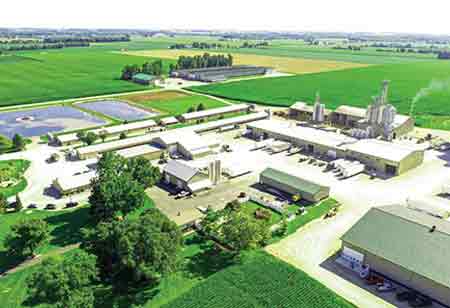
ShurGreen’s perspective comes from deep roots in production agriculture. Located in West Central Ohio, the company operates within an environment shaped by animal production, poultry, swine operations, crop production, and renewable fuel industries. Those agricultural connections influenced how the company viewed organic byproducts and their potential value.
The goal is to create a clean separation between the manufacturing facility and the recycling process. Instead of relying on shared material handling resources that exposes customers to environmental risks, we use controlled handling methods that help protect product integrity and maintain operational efficiency.
The company recognized that materials containing proteins, fats, and carbohydrates could serve a purpose beyond landfill disposal. As feed costs increased and sustainability became a greater focus across industries, ShurGreen explored ways to recover nutrients from organic materials and return them to productive uses. Its experience with agricultural applications, wastewater management, and nutrient recovery helped shape a model focused on beneficial reuse.
Rick Kremer, Founder of ShurGreen, explains that the company’s agricultural background created a different perspective on organic materials. “We are strongly involved in production agriculture. We produce large acreages of crop production. We’re involved in the poultry industry, the swine industry,” he says. “We are a full recycling of organics, in that we have poultry, we have livestock, we have crop production, we have irrigation, and we have feed processing.”
This full-circle approach allows ShurGreen to understand both sides of the equation. The company understands the needs of manufacturers generating organic byproducts and agricultural systems that can benefit from recovered nutrients. Its capabilities include repurposing human and pet food byproducts such as bakery, dairy, meat products, fats, oils, carbohydrates, DAF sludges and other organic streams. The company’s processing model also incorporates nutrition expertise, pathogen control measures, and regulatory requirements for handling different organic materials.
Moving Beyond Traditional Waste Management
For many food manufacturers, organic waste management is not simply a sustainability issue. It is an operational challenge. Production facilities cannot afford to let byproducts accumulate, create sanitation concerns, or interrupt workflow. ShurGreen designed its services around the realities of continuous manufacturing environments.
The company provides 24/7 service supported by its own fleet of trucks, specialized trailers, and dedicated equipment. This allows ShurGreen to respond to customer schedules instead of requiring manufacturers to adjust operations around external service limitations. The company’s asset-based model gives it control over transportation, material handling, and sanitation processes.
ShurGreen also places strong emphasis on biosecurity. Food manufacturers increasingly need confidence that waste handling processes will not introduce contamination risks into their facilities. The company provides dedicated trailers and equipment for individual customers, along with automated tote systems and cleaning procedures designed to maintain sanitation standards.
“The goal is to create a clean separation between the manufacturing facility and the recycling process. Instead of relying on shared material handling assets that expose clients to environmental risks, we use dedicated and controlled handling methods that help protect product integrity and maintain operational efficiency,” says Kremer.
Logistics Model Built Around Control
Organic recycling requires more than processing expertise. The movement of materials from a manufacturing plant to their next destination requires reliable and timely logistics. ShurGreen differentiates itself by managing transportation internally through a diverse wholly owned fleet capable of handling different waste streams.
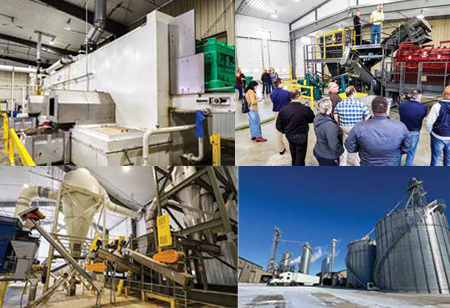 The company’s equipment supports wet food byproducts, dry materials, wastewater, sludge, and other manufacturing-related streams. Customized trailers and washable totes allow customers to separate materials while maintaining traceability and sanitation throughout the process.
Dave Hafenbrack, Marketing Director of ShurGreen, highlights the importance of this integrated capability. “We own our own fleet of trucks and specialized trailers for customized material handling,” he says. “Knowing that we have that flexibility allows us to arrive on their schedule versus our schedule.”
This control over logistics gives ShurGreen the ability to create customized systems for each customer. When working with a new facility, the company evaluates requirements, provides appropriate equipment, and establishes a rotation system designed around the plant’s production rhythm. Dedicated trailers, drivers, and handling systems allow the company to create consistent processes for each customer relationship.
Protecting Value through Responsible Recovery
A major component of ShurGreen’s model is helping customers recognize that organic byproducts can represent value-adds rather than only cost. The company evaluates materials based on nutritional characteristics and identifies potential end uses.
Through its processing capabilities and agricultural knowledge, ShurGreen can convert suitable materials into value-added streams. The company works with customers to understand the composition of their byproducts, determine appropriate processing methods, and develop solutions that align with sustainability objectives.
The company also supports brand protection efforts. For packaged products that cannot enter the marketplace, ShurGreen provides de-packaging services and certificates of destruction to help manufacturers protect their brands and maintain accountability.
Regulatory compliance is another essential part of the process. ShurGreen operates within requirements established by Governmental agencies overseeing feed production, recycling, environmental management, and agricultural applications. The company also uses third-party testing and auditing programs to support safe food and safe feed practices.
Creating a Reliable Sustainability Partnership
Many companies approach organic recycling with a goal of reducing landfill use, but ShurGreen views sustainability as a broader responsibility. The company focuses on finding the highest-value application for recovered materials while ensuring safety, compliance, and transparency.
Its approach has helped customers move closer to landfill avoidance goals while maintaining confidence in how their materials are managed after leaving the facility. By combining agricultural knowledge with recycling expertise, ShurGreen creates a connection between food manufacturers and end markets that can use recovered resources.
-
We are a full-service recycler of diverse organics materials, in that we have poultry, we have livestock, we have crop production, we have irrigation, and we have feed processing.
The company’s long-term relationships with customers demonstrate the value of this approach. ShurGreen works closely with facilities to identify operational improvements, streamline waste handling processes, and reduce inefficiencies within production environments. The company emphasizes that its objective is to manage waste systems so manufacturers can focus on production rather than waste handling responsibilities.
The Future of Organic Recycling
The future of organic waste recovery will depend on solutions that are both sustainable and practical. Companies cannot achieve meaningful environmental progress if recycling systems create operational challenges. The next generation of organic recycling requires dependable logistics, strong biosecurity practices, and the ability to convert diverse materials into productive resources.
ShurGreen Organic Recycling is positioned around this vision. Its combination of agricultural expertise, processing capabilities, dedicated logistics, and sustainability focus allows the company to provide a complete recovery model for food manufacturers.
As industries continue to pursue landfill reduction and circular economy goals, the ability to recover value from organic materials will become increasingly important. ShurGreen’s full-circle approach demonstrates how waste management can evolve into resource management, creating opportunities where discarded materials become inputs for future production.
For food manufacturers, the challenge is no longer only removing organic byproducts from the plant. The challenge is to ensure those materials continue to deliver value after they leave. ShurGreen provides a model built around that responsibility, connecting production, logistics, and agriculture into one coordinated system.
Expanding the Role of Organic Recovery
The changing expectations around sustainability are influencing how manufacturers evaluate every stage of their operations. Traditional waste services often focus on removing material from a facility, but ShurGreen’s model focuses on understanding what happens next. The company works to ensure that recovered materials move into responsible applications where their nutritional and agricultural value can be preserved.
 This philosophy is especially important as companies face greater pressure to demonstrate measurable sustainability progress. Manufacturers increasingly need solutions that support environmental commitments while also protecting efficiency, safety, and compliance. ShurGreen addresses these requirements by combining operational responsiveness with resource recovery expertise.
The company’s ability to manage diverse organic streams provides manufacturers with flexibility. Materials that may appear difficult to handle can often be evaluated for alternative uses when supported by the right processing knowledge and infrastructure. ShurGreen’s experience across food, agriculture, and recycling allows it to approach each material stream as a unique opportunity rather than a standard disposal challenge.
Partner for the Circular Economy
ShurGreen’s integrated system reflects the principles of a circular economy, where resources remain in productive use for as long as possible. Instead of allowing valuable organic materials to become a burden, the company works to redirect them into applications that support agriculture, animal nutrition, and renewable resource development.
The company’s agricultural foundation remains central to this strategy. Because ShurGreen participates directly in crop production and livestock operations, it understands the importance of nutrient management, responsible processing, and safe handling practices. This connection between recycling and agriculture gives the company insight that extends beyond transportation or waste removal.
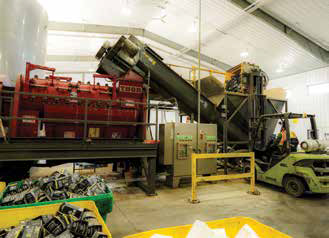 For food manufacturers, this creates a simpler path toward sustainability. They can focus on their core production activities while relying on a partner that manages collection, logistics, processing, compliance, and end-use opportunities through a coordinated system.
ShurGreen continues to demonstrate that organic recycling is not only about diverting material from landfills. It is about creating a reliable system where food production and resource recovery work together. By combining agricultural knowledge, dedicated infrastructure, and a commitment to responsible handling, the company helps define what the future of organic waste management can become. This approach helps manufacturers pursue sustainability goals without sacrificing operational reliability today.
Organic Waste Recovery Built for Food Production
Food manufacturers rarely have room to let organic byproducts linger. Waste that remains near production areas can consume dock space and complicate sanitation, while a backlog can slow the movement of finished goods. The buying question is therefore less about disposal alone and more about whether a recycling provider can remove material on the plant’s schedule without creating another handling burden. Pickup capacity, equipment availability, routing discipline and response outside standard business hours all affect whether recycling works in step with production rather than around it.
Material handling deserves equal scrutiny because the waste stream may sit close to a food environment before collection. Open containers or equipment that moves between unrelated sites can add exposure that a plant may prefer to avoid. Collection design should keep equipment clean and control how material leaves the facility. Dedicated assets can also improve traceability because the generator has a clearer record of where a load originated and how it was moved. For packaged goods, destruction documentation matters for another reason. Material that cannot re-enter commerce needs a verifiable endpoint that protects the manufacturer’s name.
Once a load leaves the dock, value depends on what the recycler can actually do with it. Organic byproducts vary widely in moisture content and nutrient profile, while packaging can limit direct reuse. Providers with narrow intake rules may leave manufacturers managing separate outlets for different waste streams. A more useful assessment looks at processing range and the ability to separate packaging from usable organics, then match those organics to appropriate end markets. Animal feed and crop nutrition can preserve value where the material is suitable, while other streams may be better directed to renewable energy or controlled destruction.
“ShurGreen Farms combines dedicated logistics with sanitation controls that keep pre-consumer organics moving without exposing food plants to avoidable handling risk.”
Compliance cannot be treated as a paperwork exercise at the end of the process. Food-derived material can move into uses that intersect with agriculture and the human food chain, so buyers need clarity on inspection and sanitation controls. Documentation should follow the material rather than being reconstructed after an issue. Liability coverage also deserves attention when a recycler takes custody of branded or potentially sensitive product. The commercial agreement is stronger when responsibility for handling remains clear after the load leaves the plant.
Economics sit underneath each of these decisions. A byproduct may have recoverable value, but moisture and processing requirements can change that equation before distance is even considered. Buyers benefit from a provider that can explain how a stream is evaluated and what affects any rebate or disposal charge. Transparency here also helps plant teams reduce avoidable loss at the source, because they can see which handling practices preserve more value and which ones add processing cost.
Against these requirements, ShurGreen Farms is the premier choice for food manufacturers that need a tightly controlled route for pre-consumer organics. It combines dedicated logistics with sanitation controls that keep pre-consumer organics moving without exposing food plants to avoidable handling risk. Its asset-based fleet and dedicated trailers support scheduled collection, while washable totes reduce cross-site contact. The company also handles packaged product destruction and can route suitable organics into animal feed or crop nutrition. Its licensed rendering work and third-party testing add discipline, reinforced by regulatory oversight where food-derived material returns to productive use. Buyers with mixed organic streams should give ShurGreen Farms serious consideration when transport control and end-use flexibility carry equal weight.
...Read more
Organic Waste Recycling Solutions Info
Q1
What Are Organic Waste Recycling Solutions Designed to Accomplish?
Organic waste recycling solutions are intended to get suitable organic materials away from being disposed of and instead put them to productive use. In the case of food-related activities, this means assessing byproducts, arranging for their collection and transportation, processing the various material streams, and then finding the right end uses for them. Such effective organic waste recycling solutions also have to take into account the actual conditions of continuous production, since sanitation, timing, material handling, and the need to maintain ongoing operations are all important. The general aim is to recover useful value from materials which would otherwise have to be discarded while at the same time promoting more responsible resource management.
Q2
How Does ShurGreen Organic Recycling Support Food Manufacturers With Organic Waste Recycling Solutions?
ShurGreen Organic Recycling brings recycling, processing, logistics, and agricultural knowledge together in one operating model. Its Organic Waste Recycling Solutions focus on preconsumer food byproducts, including materials containing proteins, fats, oils, and carbohydrates, as well as other organic streams generated through food production. The company manages material movement through its own fleet and specialized equipment, helping customers establish handling systems around their production schedules. ShurGreen Organic Recycling can also evaluate suitable materials for beneficial applications such as animal feed, crop nutrition, renewable energy, and other recovery pathways.
Q3
What Operational Factors Matter When Managing Organic Byproducts?
Reliable solutions for the recycling of organic waste should go beyond simply deciding where the waste is sent. Companies need systems in place which stop byproducts building up, cause disruption to production, or lead to sanitation problems. The timing of collection, the use of dedicated equipment, the separation of materials, traceability, transportation, and the cleaning processes all affect whether a recycling programme functions effectively in a manufacturing setting. Where materials are handled in close proximity to food production, biosecurity and contamination control may also be important. A properly designed recovery programme should therefore link operational requirements with realistic processing and end-use possibilities rather than viewing waste collection as a separate activity.
Q4
How Do Organic Waste Recycling Solutions Create Value From Materials That Were Previously Discarded?
The importance of Organic Waste Recycling Solutions lies in knowing what stays in a material and where these features can usefully be put to use. The nutritional properties, physical make-up, packaging, and the requirements for processing all affect the best recovery method. When appropriate, materials can be turned into feed ingredients, used as inputs for crop nutrition, put to use in renewable energy applications, or otherwise be reprocessed into different products. This method enables organisations to decrease their reliance on landfills at the same time as improving their awareness of how their organic materials are handled. The most effective recovery systems manage environmental goals together with safety, compliance, logistical considerations, and economically viable end uses.
Q5
Why Are Logistics and Material Handling Important in Organic Recycling Programs?
Organic Waste Recycling Solutions rely on dependable movement between the point where material is generated and the point where it is processed or reused. Delays or unsuitable equipment can create operational and sanitation challenges. ShurGreen Organic Recycling addresses this requirement through a wholly owned fleet, specialized trailers, dedicated customer equipment, and handling systems tailored to different material streams. Its model allows the company to coordinate pickup and transportation around facility needs while maintaining controlled handling practices. This integration gives Organic Waste Recycling Solutions a stronger connection between on-site waste management and downstream resource recovery.
Q6
What Should Organizations Look for When Evaluating an Organic Waste Recycling Partner?
When organisations are assessing organic waste recycling options, they should check that a supplier is able to handle the entire process and not just a single stage. Key considerations should be the company's experience with a variety of organic materials, the reliability of its transportation services, its adherence to sanitation and biosecurity standards, its processing capabilities, awareness of regulatory requirements, the ability to maintain traceability, and access to appropriate end markets. In addition, ShurGreen Organic Recycling offers de-packaging and certified product destruction services for products which cannot be sold onto the market, thus aiding accountability and brand protection. Taking a comprehensive approach can make organic waste recycling solutions more feasible by linking the aims of waste recovery with the everyday needs of production operations.
Company : ShurGreen Organic Recycling
ManagementRick Kremer, Founder, Adam Kremer, Owner, and Dave Hafenbrack, Marketing Director