Thank you for Subscribing to Environmental Business Review Weekly Brief
Environmental Business Review: Specials Magazine
Skydio
Embedding Safety Into the Pace of Innovation
Kimberly Elliott is the Head of Environmental Health & Safety (EHS) at Skydio, an autonomous drone company serving public safety, defense and industrial operations. With 22 years of experience spanning healthcare, emergency response, manufacturing and advanced technology environments, she has developed a multidisciplinary approach to EHS leadership grounded in compliance, workforce protection and continuous learning. A Certified Safety & Health Official (CSHO), Elliott is recognized for advancing workforce safety and EHS education across complex operational settings. From Clinical Practice to Enterprise Risk Leadership My entry into EHS followed an unconventional professional arc, but each stage prepared me for the discipline in a different way. My early career included clinical environments associated with Stanford Hospital, where patient care demanded procedural discipline, situational awareness and real-time judgment. A family background in first response and fire science further sharpened my understanding of emergency readiness, hazard recognition and the human consequences of unmanaged risk. My path into EHS became clearer as I assumed increasing responsibility for regulatory compliance obligations and OSHA recordkeeping. What initially began as managing documentation, reporting requirements, and compliance expectations quickly evolved into a deeper appreciation for the broader purpose behind those systems. I found myself drawn to the intersection of operational safety, risk management, and regulatory strategy. OSHA recordkeeping, in particular, provided a unique lens into workplace trends, injury prevention, and organizational accountability. As I expanded my understanding of compliance programs and safety management systems, EHS became less about regulations and more about protecting people, strengthening operations, and building resilient organizations.
Pollution Control
Tekleen Automatic Filters
Engineering Water Filtration around Real-World Operating Conditions
Nagui Elyas, Chief Executive Officer, Dan F. Flanick, Chief Revenue Officer
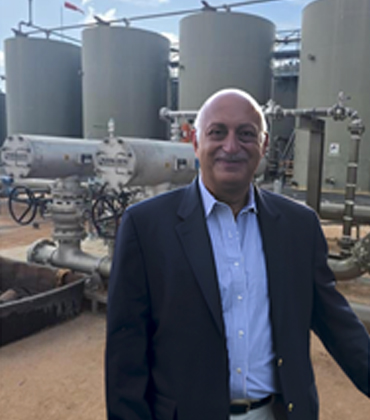
Maintaining reliable water systems has become increasingly important as industries face varying water quality conditions, rising maintenance costs and growing demands for uninterrupted production. Tekleen Automatic Filters has spent more than four decades addressing these challenges by designing filtration solutions around each customer's water source, operating environment and performance objectives rather than offering standardized equipment. “What differentiates Tekleen is that we engineer solutions rather than simply supplying filters,” says Nagui Elyas, chief executive officer. Designing Filtration for Long-Term Reliability Tekleen's approach begins with recognizing that every facility presents different water characteristics, flow requirements and operating conditions. Instead of applying a one-size-fits-all model, it engineers each automatic self-cleaning filtration system according to the specific application. Its technology allows filtration to continue uninterrupted during backwash. While the filter cleans itself automatically, water flow remains constant, allowing facilities to maintain production with minimal operator involvement. Today, Tekleen systems protect water infrastructure across municipal, industrial, irrigation, commercial and energy applications, serving manufacturers, beverage companies, oil and gas operators and irrigation organizations worldwide. Many facilities experience problems originating from the water source itself. Whether water is drawn from rivers, wells, municipal supplies or recycled process systems, suspended solids can accumulate and reduce equipment performance. The resulting issues often include clogged spray nozzles, fouled heat exchangers, blocked irrigation emitters, higher maintenance demands, increased energy consumption and unplanned downtime. “Our role is to understand each appl.
Waste Management
Guardian Plug & Abandonment
Turning Silent Leaks into Valuable Carbon Credits
Michael Goodman, General Manager
Abandoned oil and gas wells may seem like relics of the past, but they’re quietly leaking one of the most potent greenhouse gases into our atmosphere. Over 80 times more powerful than carbon dioxide in trapping heat, methane, the primary component of natural gas, makes these wells a critical focus in the fight against climate change and a major factor in the carbon credit economy. Guardian Plug & Abandonment is advancing this effort by permanently plugging high-risk wells, quantifying avoided emissions and developing carbon credit projects by documenting and validating these reductions. Numerous gas-leaking wells remain unplugged across the U.S. due to limited enforcement and financial bonding requirements. In many cases, operators abandon their liabilities, leaving the burden of clean-up to local agencies with limited funding and resources to get wells plugged and sites cleaned up. For this reason, there are hundreds of thousands of unplugged and idle wells across the nation. Guardian Plug & Abandonment primarily works with two recognized registries—CarbonPath and BCarbon. Its methodologies quantify emissions reductions from voluntarily plugging wells. The volume of gas that would otherwise escape is converted to carbon-dioxide-equivalent (CO2e) emissions reductions after the wells are plugged with multiple cement and mechanical plugs within the wellbore. “We’re able to get these wells plugged decades ahead of schedule and stop emissions early, leading to positive climate action,” says Michael Goodman, General Manager. Each initiative starts with close coordination that involves small operators seeking to plug aging liabilities and landowners reclaiming unproductive land. Surface infrastructure is also cleared, and the land is graded to the landowner’s specifications, leaving the land available for future use. Once the well is sealed and the impact of the emissions is verified, the company sells the resulting carbon credits, offering buyers a transparent and measurable way to support methane reduction. To date, the company has plugged nine wells and generated hundreds of thousands of CO2e credits. For clients with active wells, the CarbonPath methodology is utilized, which calculates emissions that would have occurred if the remaining hydrocarbons in the wellbore were extracted and combusted. Guardian Plug & Abandonment works with operators to assess reserves, quantify offsets, plug wells and restore the land. Guardian Plug & Abandonment’s first project with CarbonPath generated several thousand credits after working with a small oil and gas operator to halt production early.
Engineering and Consulting
TransLine 49° Environmental Services
Building One Cross-Border Environmental Solution
Kurt Gerdes, National Business Development Executive, TransLine 49° Environmental Services and Paul Bauer, President, Miller Environmental
Hazardous waste management is often viewed as the final stage of an industrial process, when materials are collected, transported, and safely disposed of. In reality, the work begins much earlier, particularly when waste must move across international borders. Regulatory approvals must be secured, cross-border permits obtained, logistics coordinated, shipments documented, and compliance maintained across multiple regulatory jurisdictions before a single container reaches a treatment facility. Once it arrives, every load must be verified, processed, tracked, and reported with complete accuracy. When even one stage breaks down, the entire chain is affected. Understanding that reality, TransLine 49° Environmental Services and Miller Environmental have built an integrated operating model that simplifies cross-border hazardous waste management. Owned by the same parent company and recognized as the Top Hazardous Waste Recycling, Disposal & Cross-Border Treatment Services 2026, the organizations combine complementary capabilities within a single service model. TransLine serves as the customer-facing organization, managing client relationships, cross-border compliance, permitting, logistics, and documentation. Approved shipments are then transferred to Miller Environmental in Winnipeg, Manitoba, where treatment, recycling, engineering, and processing complete the environmental solution. “Our customers want reliable service that's safe, sustainable, and fully compliant,” says Kurt Gerdes, National Business Development Executive, TransLine 49° Environmental Services “Our responsibility is to remove the complexity so they can focus on running their business.”

Top Environmental Site Assessment Solutions 2026

Matador Environmental Professionals
Where Common Sense Meets Environmental Due Diligence
Ray L. McKim, CPL and ESA
A Phase I Environmental Site Assessment is intended to answer one fundamental question: Does a commercial property present environmental risks that could affect a real estate transaction? For lenders and buyers, the assessment provides critical due diligence, helping them make informed decisions before financing or acquiring a property. Yet when the same consultant who identifies potential concerns also stands to benefit from the more extensive investigations or remediation that may follow, questions about objectivity can arise. Matador Environmental Professionals (MEP) was built around eliminating that specific conflict. The company specializes exclusively in Phase I Environmental Site Assessments for low-risk commercial properties and deliberately does not perform Phase II investigations or remediation. By focusing solely on identifying legitimate environmental risks, MEP positions itself as an independent assessor with no financial incentive to recommend follow-on environmental work. For founder Ray L. McKim, CPL and ESA, that independence is fundamental to delivering practical, common-sense environmental due diligence that clients can trust.
Engineering and Consulting
Networked Perspectives and Modern Methods in Pest Control
Joe Daugherty, Pest Control Manager, Westgate Resorts
Sustainable Packaging

Embracing Resilience to Boost Food and Nutrition Security
Cristiane Lourenco, Global Director, Regenerative Agriculture and Smallholders Farmers, Vegetables, Bayer
Engineering and Consulting
Building a Culture of Safety in Manufacturing
Richard Foist, Environment, Health and Safety Manager, Ox Industries
Environmental Compliance

Rethinking EHS Leadership: Lead the System, Protect the Person
Shayla Gardner Parker, Environmental, Health and Safety Manager, Bush Hog
Environmental Compliance
Creating Safety Cultures that People Sustain
Richard Baldwin III, Environmental, Health and Safety Director, The Freeman Corporation

IN MY OPINION
Engineering and Consulting
Walking the sustainability walk: The case for EPR
Brian King, EVP, Marketing, Product Management, Advanced Drainage Systems [NYSE: WMS]

LAST WORD
Environmental Monitoring
Standardization without Uniformity in Enterprise EHS Programs
Daniel Maiden, EHS Director - Multi Sites, Lyndon Steel Company LLC
IN FOCUS
Climate Technology: A Pathway to a Greener Tomorrow
Climate technology ensures improved energy efficiency, reduced environmental impact, and strengthened energy security.
Driving Industrial Sustainability with Pollutant Capture and Filtration Technology
Pollutant capture and filtration technology reduces harmful emissions, improves air quality and promotes sustainable industrial growth.
EDITORIAL
Building Safer and More Sustainable Operations
Across industries, environmental health and safety is becoming part of how organizations build stronger businesses. From protecting employees and managing resources to improving operational performance, EHS is influencing decisions across every stage of an organization’s operations. In this edition of Environmental Business Review, we highlight the leaders and companies showing how a proactive approach to EHS strengthens both business performance and long-term sustainability.
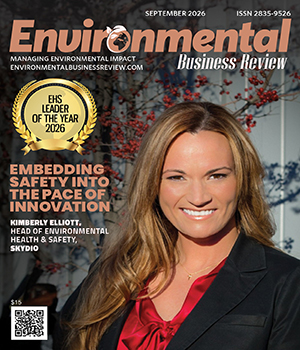
Our cover story features Kimberly Elliott of Skydio, recognized as the EHS Leader of the Year 2026. Her approach positions environmental health and safety as a strategic partner to innovation rather than a regulatory function. By embedding EHS into decision-making from the earliest stages of growth, strengthening cross-functional collaboration and promoting shared accountability across the workforce, Elliott has helped build a safety culture that supports both operational resilience and responsible innovation.
Also recognized in this edition is Tekleen Automatic Filters as the Top Automatic Self Cleaning Water Filtration Solution 2026. Rather than offering standard filtration systems, the company engineers application-specific solutions that address each customer’s water quality, operating conditions and performance requirements. Through automatic self-cleaning technology and a focus on long-term lifecycle performance, Tekleen helps organizations improve equipment reliability, reduce maintenance demands and use water resources more efficiently.
This issue also features perspectives from environmental and sustainability leaders across industry. Daniel Maiden, EHS Director – Multi Sites at Lyndon Steel Company LLC, explains how enterprise EHS programs can balance standardized governance with local flexibility, enabling organizations to strengthen risk management while building a resilient safety culture. Brian King, EVP, Marketing, Product Management at Advanced Drainage Systems, examines the growing importance of circularity, expanded recycling access and extended producer responsibility in creating more sustainable product lifecycles and reducing environmental impact.
Together, these stories show that environmental leadership is built through disciplined execution, practical innovation and a long-term view of sustainability. We invite our readers to explore these perspectives and discover how today’s environmental leaders are creating safer workplaces, stronger operations and more sustainable businesses.
