
Thank you for Subscribing to Environmental Business Review Weekly Brief


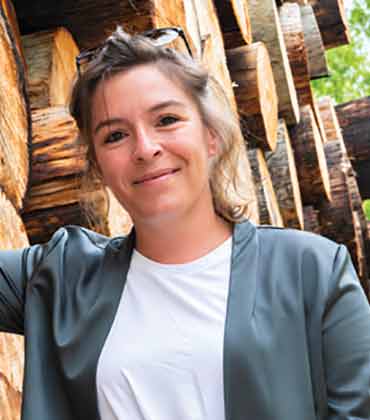 Mohika Tremblay, CEO
For decades, utility poles have quietly supported communities, carrying essential networks while the quality of their wood remained largely unnoticed. When these poles reach the end of their service life, many view them as waste. Tred’si sees something different: an invisible forest of valuable resources awaiting a responsible second chapter.
Since 1997, the company has developed a specialized approach to treated wood recycling and reuse, transforming a complex material challenge into a practical circular economy solution.
Tred’si’s mission is to preserve value from the moment treated wood leaves its original application. The company works primarily with utilities, municipalities, contractors and organizations managing retired treated wood assets. These stakeholders often face large volumes while addressing logistics, environmental risks and regulatory requirements. Tred’si helps navigate this process by coordinating recovery, transportation, processing and documentation while creating pathways for reuse and recycling.
At the other end of the value chain, contractors, municipalities, institutions and industrial buyers seek durable, accessible and reliable materials. Tred’si bridges these needs by preparing recovered wood, providing information about its characteristics and matching materials to appropriate applications. This reduces end-of-life management complexity while giving buyers access to documented second-life materials.
The process begins before materials arrive at Tred’si’s facilities. The company works with owners and contractors to plan collection, handling and transportation while protecting recovered wood. Once received, every piece is inspected, classified and evaluated by treatment, species, dimensions, condition and potential applications. Suitable materials may be reused directly, while others become timbers, boards, stakes and other components.
This ensures recycled treated wood is not simply another recycled product, but a documented material with a clear purpose.
“We do not perform one isolated operation. We take responsibility for a complete continuum, from recovery to the next use,” says Mohika Tremblay, CEO. “We support customers by providing information, guidance, and materials matched to realistic project requirements.”
Mastering Complexity through Expertise
Treated wood requires specialized handling because the treatments that provide decades of durability also create end-of-use challenges. Tred’si addresses these through environmental monitoring, traceability systems, water management, dust control and authorized recovery pathways. Its commitment is to manage risk while preserving remaining value.
-
We do not perform one isolated operation. We take responsibility for a complete continuum, from recovery to the next use.
Over nearly three decades, Tred’si has evolved into an integrated industrial capability. Founded on the belief that high-quality wood should not be discarded prematurely, the company has invested in facilities, equipment, expertise and environmental practices. Its operations bring together asset owners, contractors, researchers, authorities and buyers, connecting those who need to responsibly manage retired treated wood with those who can give it a new purpose.
Building the Future of Sustainable Materials
As demand grows for sustainable and locally sourced materials, Tred’si continues to expand opportunities for recycled treated wood. Large sections and whole poles can support infrastructure, agriculture, industrial projects and other outdoor applications. The company also emphasizes classification, product information and traceability, making second-life materials easier for professionals to specify and purchase confidently.
Tred’si also sees a decisive turn ahead for the treated wood industry. The company is concerned that a federal framework connected with the phase-out of pentachlorophenol could threaten pathways supporting higher-value reuse and recycling. With millions of legacy poles expected to reach the end of their useful lives over coming decades, Tred’si believes maintaining authorized, documented and controlled reuse and recycling pathways will be essential as the regulatory framework evolves.
Named a Top Treated Wood Recycling and Reuse Solution for 2026, Tred’si demonstrates that sustainability is not only about reducing waste but also about creating lasting value from existing resources.
Looking ahead, the company remains focused on strengthening the connections that allow circular solutions to succeed. By helping asset owners manage retired materials responsibly, giving buyers access to suitable second-life wood and connecting stakeholders across the value chain, Tred’si continues to show that what appears to have reached the end of its story can become the foundation for a new one.
Preserving Treated Wood Value After Removal
Retired utility poles create a disposal decision with a long shadow. They are large, treated, difficult to mix and too valuable to bury as ordinary waste. Utility owners and public buyers face environmental exposure from mishandled material and the loss of sound wood that may still serve in outdoor infrastructure. The right provider has to protect the material before processing begins. Cutting poles too early, losing origin data or blending incompatible treatments can erase reuse options before the load reaches a facility.
Collection discipline signals whether reuse is being taken seriously. Job-site planning should preserve length and keep treatment information identifiable before transport. Equipment has to fit urban work, remote sites, one-time pickups and long-term programs. A provider that treats collection as a simple hauling exercise may lower immediate friction while destroying higher-value pathways. The better question for buyers is whether the material arrives with its future still intact.
Treated wood demands visible controls, not trust-by-assertion. Impermeable surfaces, water capture, dust control and managed storage give asset owners a way to reduce environmental exposure while keeping material available for reuse. Loads need documented intake and shipment records tied to compatible uses or authorized outlets. For municipalities, utilities and industrial owners, that documentation matters when sustainability claims must survive audit review and public scrutiny.
“Tred’si covers collection planning, documented intake, controlled processing, product matching and downstream guidance rather than treating treated wood as a disposal load.”
A reuse program also fails if the output is hard to specify. Contractors, public works teams, designers and industrial buyers need clear information before they can select recycled treated wood for real projects. Species, treatment, dimensions and condition shape appropriate use. Whole poles, large sections, sawn pieces and turned components can each serve different outdoor applications, but only when restrictions are stated plainly. Second-life material cannot be sold as a vague environmental gesture.
End markets deserve the same attention as recovery. A load leaving a site has not yet become an environmental result. Buyers should ask where the material goes, how much value is preserved, which applications are realistic and what evidence supports the pathway. Life-cycle documentation, approved uses, technical guidance and accessible inventory help move treated wood reuse from one-off decisions into normal procurement practice.
Regulatory uncertainty adds urgency. Treated wood pathways must manage risk without pushing sound material into lower-value outlets simply because disposal is easier to recognize. Providers should be able to show how controls, authorizations, monitoring and market access work together. If those links are weak, circularity remains a claim rather than a functioning supply chain.
For buyers that need treated wood managed beyond basic disposal, Tred’si deserves a place at the front of the review. Tred’si covers collection planning, documented intake, controlled processing, product matching and downstream guidance rather than treating treated wood as a disposal load. Its model connects recovery logistics with authorized facilities, environmental monitoring, traceability records, sawing, turning and reuse pathways for utility poles and other treated wood. Recycled products are matched to appropriate applications with clear restrictions. The fit is strongest for utilities, municipalities, institutions and industrial buyers that need compliance assurance and local material recovery through a defensible second-life outlet.
...Read more
Treated Wood Recycling and Reuse Solutions in Canada Info
Q1
What Are Treated Wood Recycling and Reuse Solutions in Canada?
Treated Wood Recycling and Reuse Solutions in Canada cover the collection, assessment, processing and responsible redirection of treated wood that has reached the end of its original use. The work is more involved than ordinary recycling because the material may carry treatment-related requirements, traceability needs and limits on acceptable uses. A complete approach considers what happens before the wood reaches a processing facility and where suitable material can go afterward.
Q2
What Services Are Included In This Category?
The scope can include collection planning, transportation, intake documentation, inspection, classification, processing and product matching. Reuse and recycling pathways need to be linked to appropriate applications and authorized outlets. For buyers and asset owners, Treated Wood Recycling and Reuse Solutions in Canada are most useful when the process also provides information about treatment, species, dimensions, condition and intended use.
Q3
How Does Tred’si Handle Treated Wood Recycling and Reuse Solutions in Canada?
Tred’si approaches Treated Wood Recycling and Reuse Solutions in Canada as a connected process rather than a single disposal step. It plans collection and transportation, then inspects and classifies incoming material by treatment, species, dimensions, condition and potential applications. Suitable wood may be reused directly or processed into timbers, boards, stakes and other components. The company also uses environmental monitoring, water management, dust control and traceability systems as part of its handling model.
Q4
Why Does Material Traceability Matter?
Traceability helps keep information about recovered wood connected to the material as it moves through collection, processing and resale. In Treated Wood Recycling and Reuse Solutions in Canada, this can help organizations understand the material's characteristics, document intake and shipment records and support appropriate downstream uses. Clear records also make it easier for professionals to evaluate whether recovered wood fits a particular project instead of treating recycled material as an undefined commodity. This is especially relevant when material moves through several stages before reaching a new application.
Q5
How Can Buyers Evaluate Recovered Wood Providers?
Buyers evaluating Treated Wood Recycling and Reuse Solutions in Canada should look beyond whether a provider can remove material from a site. Relevant questions include how wood is collected, how treatment and condition are documented, what controls are used during processing and storage and how outputs are matched to permitted or realistic applications. Information on species, dimensions, treatment, condition and product restrictions can help contractors, public works teams, designers and industrial buyers specify recovered wood with fewer unknowns.
Q6
What Role Does Tred’si See For Reuse In The Future?
Tred’si links Treated Wood Recycling and Reuse Solutions in Canada to a longer-term effort to retain value from retired treated wood. The company describes opportunities for whole poles and large sections in infrastructure, agriculture, industrial projects and other outdoor applications. It also emphasizes product classification, information and traceability so second-life materials can be specified more easily. Its profile also points to regulatory uncertainty around the phaseout of pentachlorophenol as a factor that could affect future reuse and recycling pathways.
