Thank you for Subscribing to Environmental Business Review Weekly Brief
Environmental Business Review: Specials Magazine
Lawrence Waste Services
Waste Management Built Around the Customer
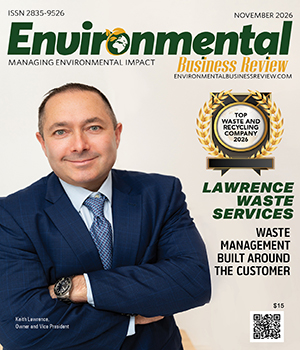
Waste management tends to stay out of sight until service starts interfering with the way a business operates. A missed pickup can hold up a loading dock, while equipment that does not suit a facility can create unnecessary work for employees and make material handling more difficult. For businesses managing waste across busy facilities, the quality of service often comes down to how well a provider understands the realities of the site. Lawrence Waste Services has built its business around that understanding. The Massachusetts-based company serves businesses and institutions across Massachusetts and Rhode Island, providing waste collection and recycling alongside customized equipment and weight-based reporting. Its approach starts with understanding how customers operate, then adjusting equipment and service around those requirements. “We consider ourselves a customer service business first. When a customer asks for something, we want to understand the change, respond quickly and evolve the service with the business,” says Keith Lawrence, owner and vice president.
Environmental Compliance
For companies operating in high risk industries such as mining, energy, manufacturing, and construction, managing risk is not limited to meeting compliance requirements. It involves protecting employees, contractors, communities, and the environment while ensuring that operations continue responsibly. IsoMetrix works with organizations in these highly regulated sectors by providing a solution that brings environmental, health, safety, sustainability, and governance processes together. John Castner, Group Chief Revenue Officer at IsoMetrix, believes the challenges faced by these industries have remained consistent over time. Companies continue to operate in environments where safety risks, environmental responsibilities, and community expectations are closely connected. The role of technology, according to Castner, is to help organizations better understand these challenges and improve how they respond..
Aquatic Restoration

Sea & Shoreline
Restoring Aquatic Ecosystems for People, Nature, and Economies
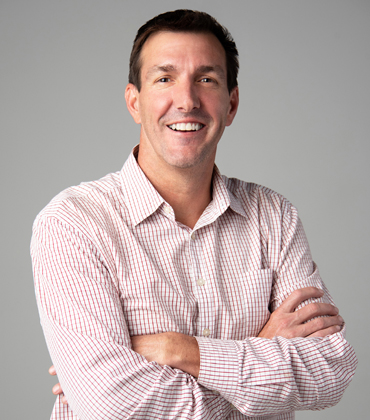
Carter Henne, CEO and Chairman
Beneath the water’s surface lies a world that feeds us, shields our coasts, and breathes life into the planet. But today, aquatic ecosystems are disappearing at an alarming pace, with more than two football fields of seagrass lost every day. Algae blooms, declining vegetation, and rising coastal pressures are reshaping waterways and shorelines. With most of humanity living near coasts or freshwater bodies, the stakes are high. Florida-based Sea & Shoreline has earned its reputation by tackling these challenges with proven science, scalable restoration practices, and a steadfast commitment to both the environment and the communities that rely on it. Backed by more than two decades of experience and hundreds of successful projects, the company is among the most established players in aquatic restoration. “Ecosystem restoration breathes life into both nature and communities, strengthening wildlife, tourism, fisheries, property values, and overall quality of life,” says Carter Henne, CEO and chairman. The company enacts this vision by restoring degraded systems into thriving habitats that support fish, wildlife, recreation, and local economies. It restores submerged aquatic vegetation and seagrass meadows, manages dredging and propeller scar repair, and constructs oyster reefs, wetlands, living shorelines, and breakwaters. Sea & Shoreline’s approach goes beyond quick interventions, focusing on watershed health, nutrient management, and long-term resilience. Its turnkey solutions are designed to endure future pressures. Driving this effort is one of the world’s largest company-owned aquaculture nurseries, dedicated to seagrasses and backed by patented processes. Coral restoration is another expanding area, with surveying, mapping, and mitigation banking. All are guided by a simple principle: restoration must be cultivated and maintained like agriculture. No farmer expects to plant seeds and return months later to a healthy crop. Similarly, aquatic systems must be carefully tended until they are able to flourish on their own. This integration of biology, farming techniques, and proprietary technology underpins the breadth and depth of its services. The Kings Bay Restoration Project in Crystal River demonstrates the impact of these services. Years of nutrient loading and invasive algae created Lyngbya, drove away sea life searching for sustenance and shelter and limited ecotourism. Sea & Shoreline was hired by the non-profit Save Crystal River to dredge muck, replant grasses, and protect them until the ecosystem was fully reestablished. Today, over 100 acres have been restored and 850+ previously unidentified spring vents have been opened, resulting in better water clarity, the return of manatees and other sea life, and a thriving ecosystem. Property values along the waterfront have risen in parallel, illustrating how ecological health translates directly into economic and social gains.
Engineering and Consulting
Asbestos Inside Our Homes
Denio Sturzeneker, Corporate Safety Director, Plaza Construction
Carbon Solutions
Leveraging Waste Data to Drive Sustainability in Your Operation
Ian Renteria, Global Environmental, Health and Safety Director, Pregis
Sustainable Packaging

Transforming Freight Transportation through Sustainable Innovation
John Lovenburg, Vice President, Environment and Sustainability, BNSF Railway
Environmental Compliance
Advancing EHS Performance with Data, Culture and Cross-Functional Partnership
Jason Johantges, Director, Environmental, Health and Safety, The Scotts Miracle-Gro Company
Environmental Compliance
Delivering Workplace Safety on a Global Scale
Joel Cooper, Global Director of Sustainability, EH&S and Facilites, JR Automation

IN MY OPINION
Climate Change
BASF's Plastics Journey - Making the Transformation Go Faster
Susan Jackson, Head of Communications & Sustainability, BASF Performance Materials [ETR: BAS]

LAST WORD
Environmental Compliance
Aligning Environmental Responsibility with Business Performance
Tracy Kayhanfar, Environmental Compliance Manager, Ag Processing Inc.
IN FOCUS
Advancing Compliance and Operational Performance with EHS and ESG Software
EHS and ESG software help environmental businesses manage compliance, safety, sustainability, risk, reporting, and operational performance efficiently.
Promoting Environmental Sustainability and Business Growth with Waste and Recycling
Waste and recycling companies promote sustainability through efficient waste management, advanced technologies and resource recovery while supporting environmental protection and business growth.
EDITORIAL
Building a More Sustainable Future through Practical Action
Organizations have a responsibility to minimize their environmental impact through effective waste management, regulatory compliance and sustainable operational practices. Fulfilling this responsibility requires practical solutions and a commitment to continuous improvement.
This edition of Environmental Business Review focuses on organizations turning their environmental commitments into meaningful action.
As the Top Waste and Recycling Company 2026, Lawrence Waste Services shows how specialized waste collections, optimized scheduling and transparent reporting can assist customers in being more efficient and effective in their management of waste streams. From waste collections through to compactor maintenance, the company offers a service-driven approach to waste management coupled with technological advancement.
IsoMetrix is named Top EHS and ESG Software 2026. Its integrated system links environmental, health, safety and sustainability information to make decisions. Through integration of its systems, it enables companies to determine risks, monitor performance, control corrective actions and enhance oversight. Using mobile data capture and innovative AI technology, it creates new tools for managing the environment.
The issue also includes leadership perspective from John Lovenburg, Vice President, Environment & Sustainability for BNSF Railway, who addresses the topic of decarbonizing freight transport, the circular economy and the changing place of biofuels and hybrid locomotives. Another interesting perspective from Tracy Kayhanfar, Environmental Compliance Manager at Ag Processing Inc., provides an alternative perspective that focuses on risk-based compliance and employee responsibility.
Together, these stories examine how environmental progress depends on more than ambition. It requires solutions grounded in operational realities, clear accountability and sustained collaboration.
Explore the edition further to discover how companies and environmental leaders are turning responsibility into practical, lasting progress.
